Sunday, November 19, 2017

THE SEA TURTLES OF PUERTO VALLARTA AND MEXICO


One of the biggest surprises of living in Puerto Vallarta has been my exposure to the local animal wildlife. Since Puerto Vallarta has quite a well-deserved reputation for its wild nightlife getting to know and learn about the non-human wildlife inhabitants has been an unexpected benefit of living in this beautiful part of México. The creatures with which we share the planet I find fascinating.

I have also learned a lot from researching some of them in order to create my blog posts which includes the IGUANAS, PELICANS , and DONKEYS . I unashamedly admit to having had slight “affairs of the heart” with them including even the iguanas!
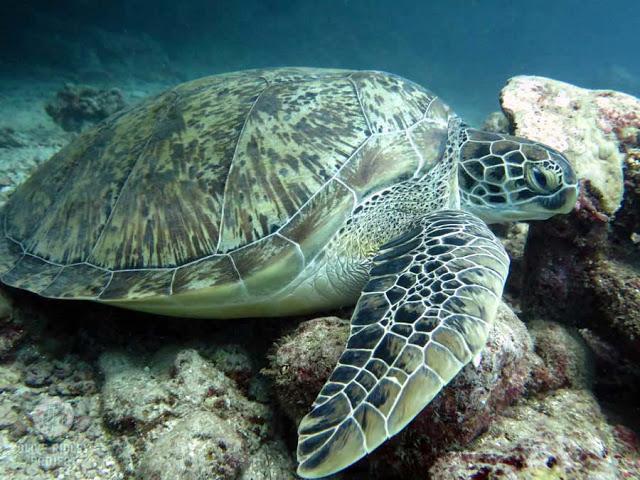


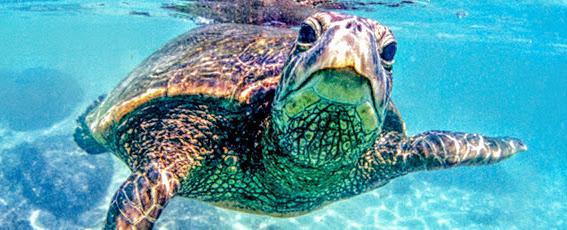
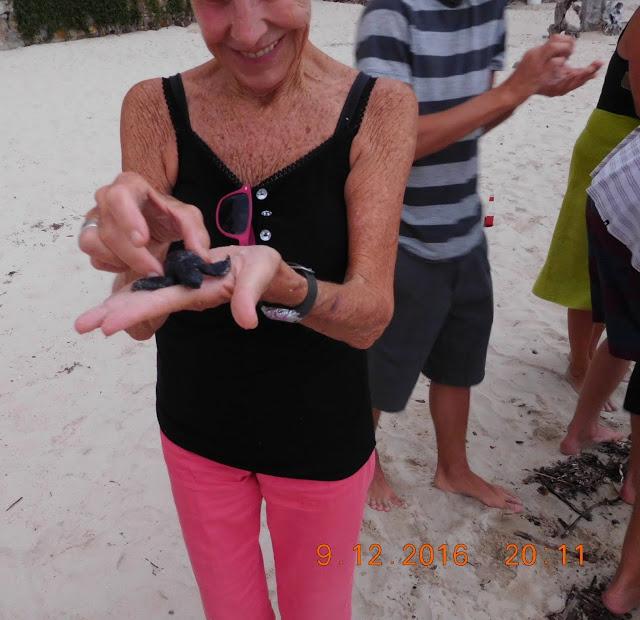
But nothing has touched me as much as the sea turtles. Maybe it’s because I have held them in my hands within a day or two of their hatching and their release to the great big sea of life. Whatever the reason, I find them a fascinating creature and I look forward to sharing them with you in this posting.
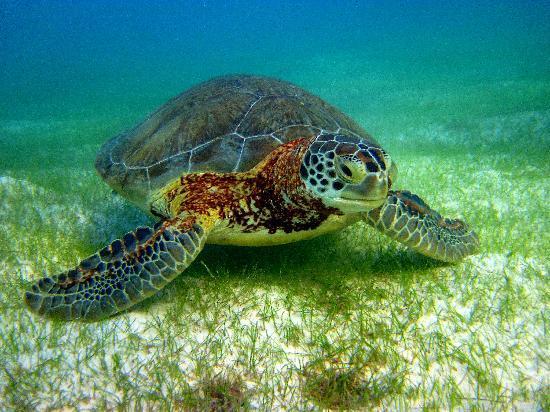


Marine turtles are some of the oldest creatures that have ever existed on earth with some 200 million years of evolution. Evidence from Prehistoric times indicate that marine turtles were much larger than their contemporary relatives and measured up to 13 feet in length with a wingspan of up to 16 feet. These were some serious dinosaur-sized turtles! 
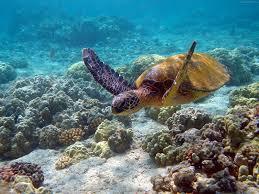


The beaches of Mexico are breeding areas for seven of the eight marine species of turtles. The following are the most common species found in Puerto Vallarta:

Olive Ridley turtle, or "Golfina (Lepidochelys olivacea)

Leatherback (Dermochelys coriacea)

Green turtle (Chelonia agassizii)

Hawksbill (Eretmochelys imbricata)

All 8 species are in danger of extinction and 7 of them come to nest on Mexican beaches. Natural predators have been around for thousands of years, but it is the impact of humans which is affecting their numbers either through hunting, pollution, development on beaches, or entanglement in fishing nets.


Since we are fortunate to live on a beach in Puerto Vallarta on the Bay of Banderas we have the privilege of sharing the environment with the Olive Ridley turtles. There are 12 beaches where Olive Ridley turtles nest around the world according to Mexico’s National Commission of Natural Protected Areas (CONANP).
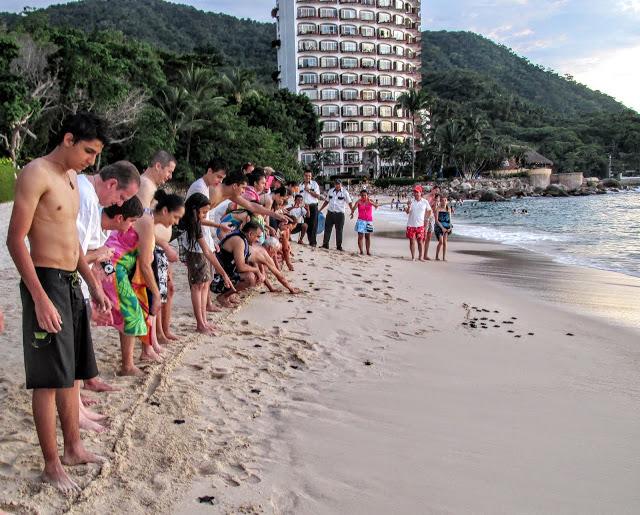


A baby turtle release at sunset is always a special event.
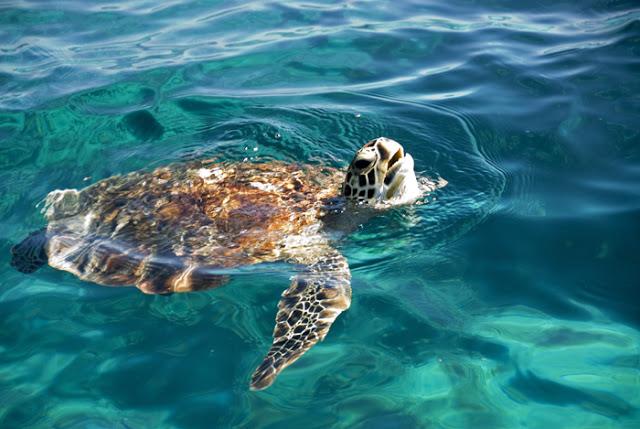
The most important breeding grounds for the Olive Ridley turtle in Mexico are distributed along the western central Pacific Coast including the Sea of Cortez with approximately 200,000 nests per year. The endangered Olive Ridleys, whose numbers worldwide have plummeted in recent decades after mass exploitation, are one of the smallest sea turtles weighing an average of not more than 100 pounds (45 km) and reaching a length on average of not more than 2 feet (65 cm) as adults.


The good news for the Olive Ridley who was struggling to survive as a species as recently as 15 years ago is now making a comeback in México thanks to the protection of both government agencies such as CONANP (The National Commission of Natural Protected Areas), military forces, and private organizations, groups, and their supporters.
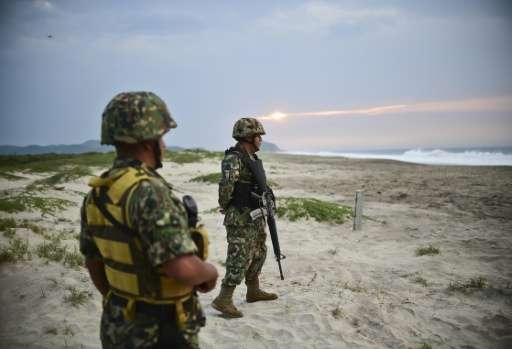
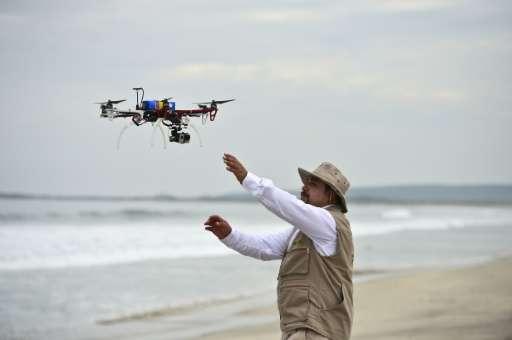


The Mexican government notes that egg poaching still occurs, but great strides are taking place to curb this illegal practice where turtles are commonly found nesting. Drones have even been put in place to monitor critical nesting habitats in the state of Oaxaca. Bravo!


Sea turtles travel thousands of miles between feeding and nesting grounds. Once they reach sexual maturity between 8 and 12 years of age the females return to the same beach where they were born in order to lay their own eggs. It appears to be part of their genetic material to return to their place of birth. I find this simply astounding!


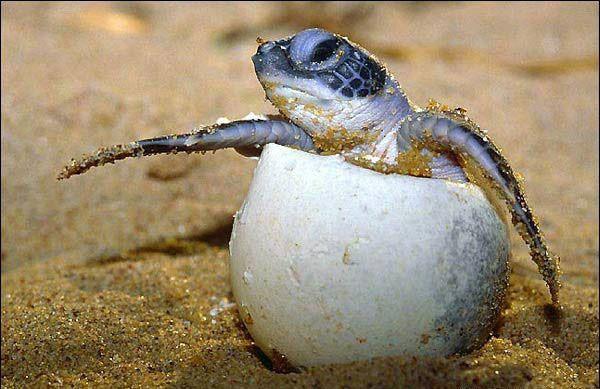
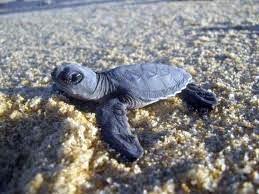
Once they hatch, the tiny black baby reptile turtles haul themselves to the sand’s surface and painstakingly crawl to the sea. Small enough at birth to fit into a child’s palm, females sea turtles return to land as adults in order to reproduce. Male sea turtles, however, never return to their place of birth and spend their entire lives swimming the oceans. Studies indicate that for every thousand baby turtle hatchling only one will make it to reproductive adulthood which translates to only one (1) percent!


I also find it interesting that there is a 8 year period between a turtle’s birth until they reach sexual maturity which are referred to as the “lost years” where very few turtles are seen. It is speculated that since the baby turtles are not yet strong enough to use the ocean currents to get them from the breeding to the feeding grounds that the currents actually carry them far away from known concentration areas. Because these same currents also carry a multitude of organisms that are on the turtle's diet it is suspected that they can feed relatively easily.
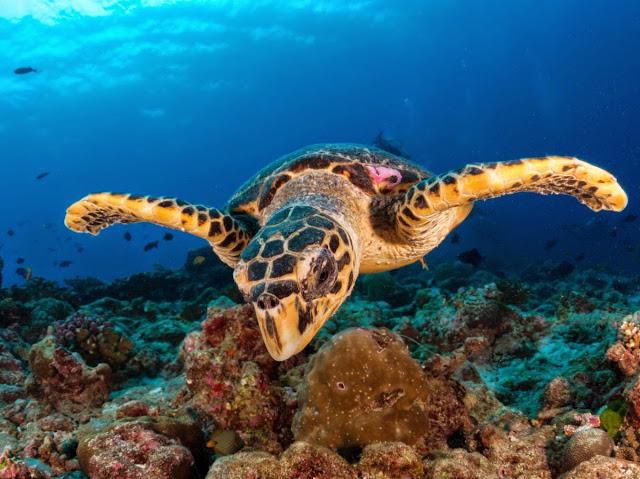
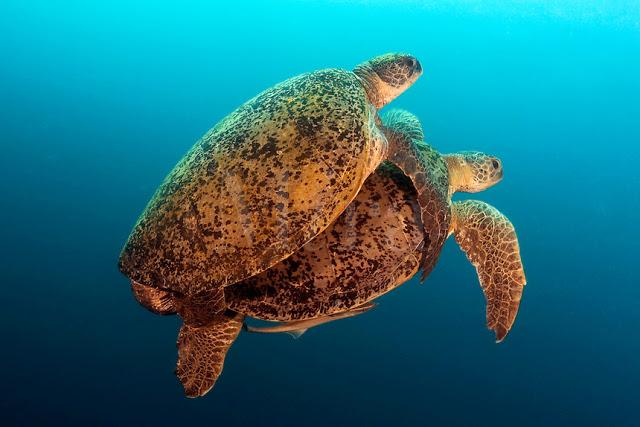


Mating between marine turtles occurs principally near the surface of the ocean and close to the nesting beaches or along the migratory routes and is not often observed. After the coupling is over, the partners will usually swim away separately.


The reproduction season here in Puerto Vallarta on the Bay of Banderas begins in June and ends around December with the highest percentage of nestlings from July to September. Another interesting fact is that the sex of the hatchling isn't determined in advance by a gene, but rather by the temperature during the incubation period. 

For the Olive Ridley turtle, incubation temperatures around 30° Celsius or 86°Fahrenheit will produce about half males and half females. Temperatures above 30°Celsius or 86°Fahrenheit will produce more females and the opposite occurs at lower temperatures.


Here we have three buckets of baby turtles which will soon face the challenges of the ocean for the first time.

The reproductive cycle of the sea turtle is usually annual, but in some cases turtles may reproduce and nest every 2 or 3 years. It appears that those turtles who travel furthest during migrations reproduce less often than those residing near the nesting sites where they may reproduce almost on an annual basis.


Once the female is ready to lay her eggs she will wait for a quiet time when disturbance is at a minimum. Sea turtles are cold blooded and cannot regulate their body temperature. Because of this they most often choose the night to lay their eggs. Night also offers these turtles better protection from predation and the rainy nights during summer seem to be as good a time as any.


The quantity of eggs laid by a female turtle is higher on the first nestlings and reduces on the subsequent ones. For example a turtle laying 3 times may produce 130 eggs the first time, 90 eggs the second time, and 60 eggs the third time. 

Of course, these numbers are just an example and they may also vary according to weather, depredation, disturbances and level of health of that specific turtle. The following photo is of our turtle egg "sanctuary" where they incubate until hatching.
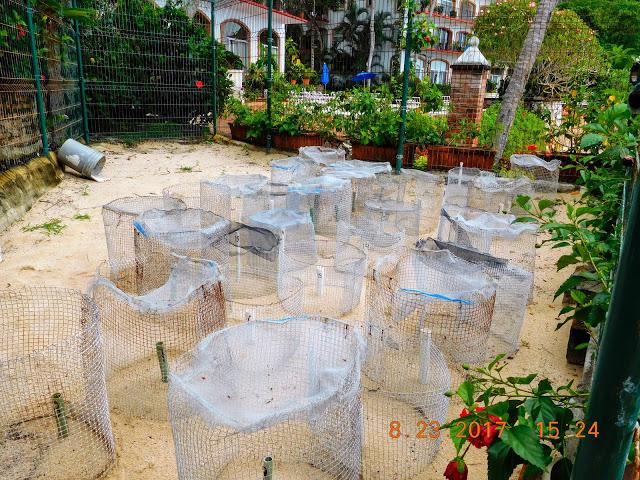

This is one of the turtle "sanctuaries" where the turtle eggs are protected from predators until they hatch. 

The egg size is that of a ping pong ball which is perfectly round and quite soft. These soft turtle eggs allows the female to drop them into the nest dug in the sand without cracking them.The incubation period varies relatively from region to region, but here in the Banderas Bay region the incubation period is approximately 40 to 50 days.
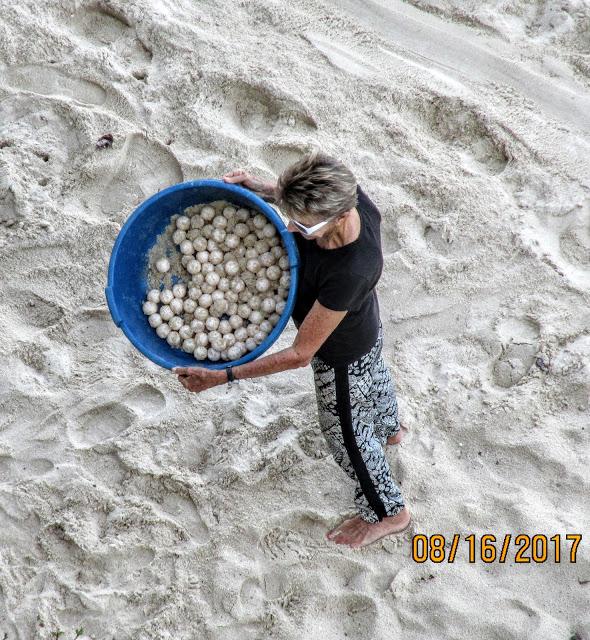


Turtle eggs are collected for protection in the "sanctuary" until they hatch.

Each morning during the turtle season before our coffee is brewed my husband and I will go out and look for turtle tracks in the sand. When we see the tracks we know that our beach has been visited during the night and a future generation of turtles have been left behind for incubation and hatching. It always makes us smile.
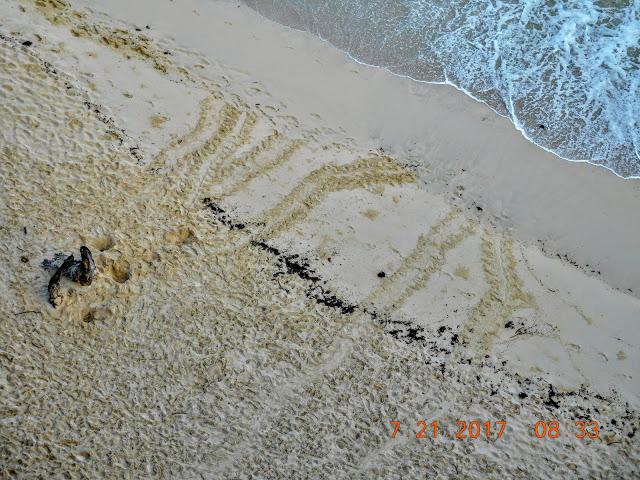
 
Tracts left by the female turtles during the night when they come ashore to deposit and bury their eggs.


The Olive Ridley turtles, as with many other species of marine turtles, encounter numerous threats throughout their lives. Also during the egg stage, the predator list may include animals such as dogs, jaguars, foxes, pigs, ants, and crabs. We are proud to have a rescue and sanctuary program where we live for the sea turtle. Each morning when there is evidence that eggs have been left behind in nests for incubation they are gently retrieved from the nest and placed in a protected environment until they hatch.
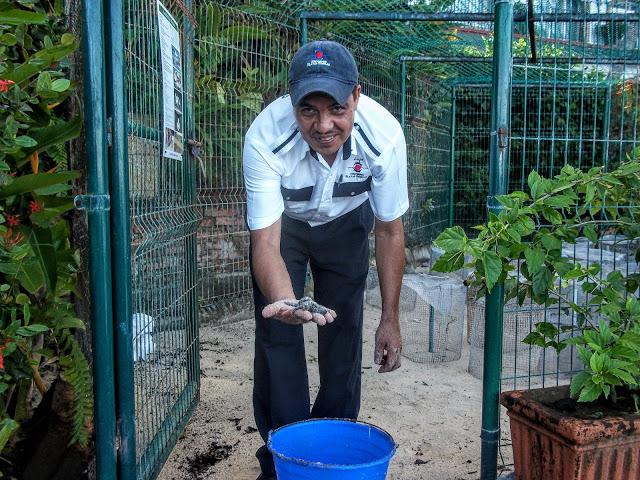


The tiny baby turtles will be released within a day of their hatching.

When they hatch there is an evening ceremony where we participate in their release to the ocean for the beginning of their seagoing lives. It is quite a touching experience and one of which we never grow tire. The following two photographs are at sunset when the baby turtles are released. Good luck little ones!
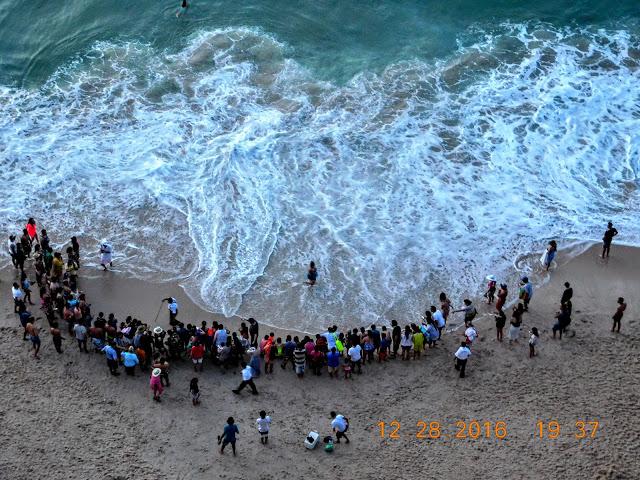
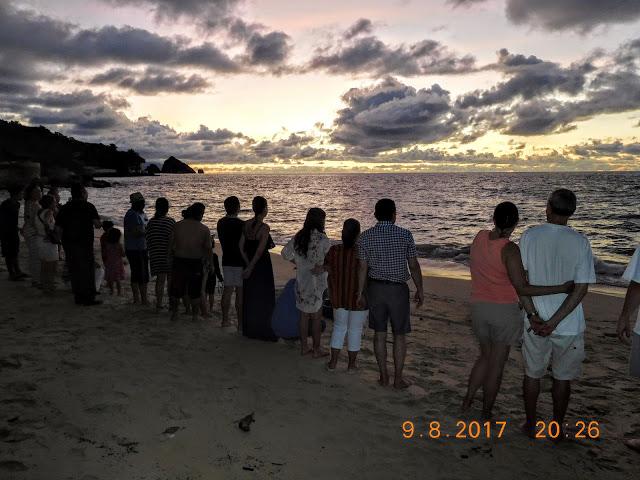
Locals and visitors alike participate in releasing the baby turtles before the sun sets.

Good luck little ones!

During the early stages of life, until they reach adulthood, sea turtles are also at the mercy of predators such as birds (including the magnificent frigate birds and pelicans) and fish. Sharks and killer whales are their main natural predators when they reach adulthood if they make it to that stage at all. Being born a sea turtle is quite a challenge and not one that I envy!


It is said our future lies in the hands of our children. On your next vacation or visit to a sea turtle area I suggest you take yourself and your children to a turtle camp. There you both can learn about these marvelous creatures of the ocean. Participate in a baby turtle release program and get the experience of a lifetime. 

There is nothing much more touching than holding a baby turtle in your hand, giving it a name and a kiss, wishing it luck on it's tough journey, and watching it make its way to its home: the great big sea of life.
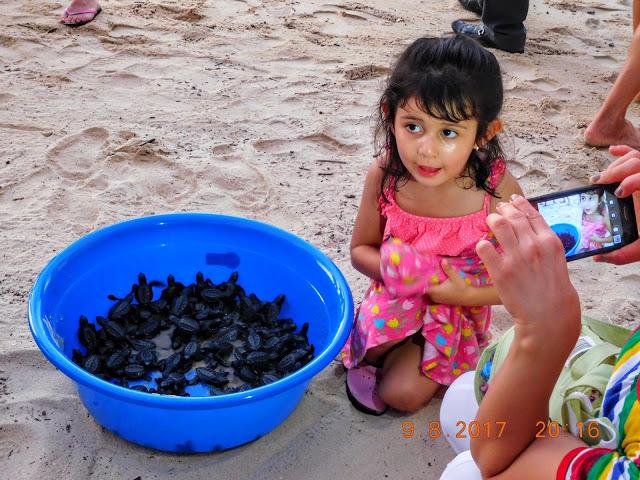
 
An experience not to be forgotten regardless of age.


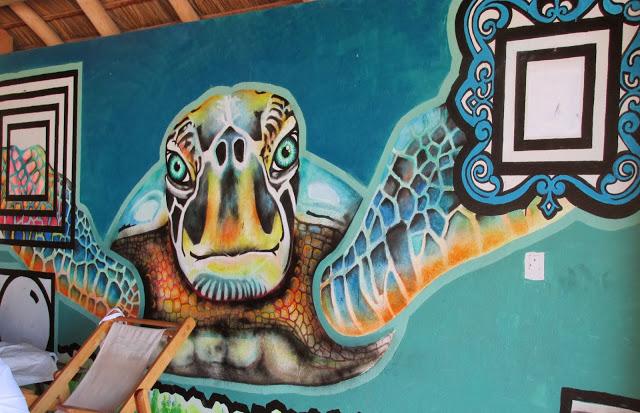
I am particularly fond of this mural in Puerto Vallarta's Old Town area.

Until next time, wishing you well from the sea turtles in Puerto Vallarta and Mexico. I hope you enjoy this blog posting and please do not hesitate to share it with your family and friends. Saludos, Laura


PS The following two videos were taken recently when we surprised a turtle while snorkeling and during one of the baby turtle releases. Simply click on the arrow in order to view the videos.


Unfortunately for this turtle we disturbed her meal while snorkeling and she immediately "flew" away.


Hundreds of tiny new hatchling turtles scramble to the sea and I wish them much luck!


Monday, October 30, 2017

DAY OF THE DEAD (DIA DE LOS MUERTOS) 2017


Welcome to Mexico and Beyond: Laura's Photo Journey and my annual visit to the Day of the Dead (Dia de Los Muertos) celebrations of 2017 in Mexico. Without a doubt, this annual tradition is one I especially look forward to and I never tire of it's colorful pageantry.  I have created a new photograph album for this posting which includes photos from San Miguel de Allende, Oaxaca, Puebla, and Mexico City.


And for those of you who love the tradition and imagery as much as I do I have also included the links to my three previous Day of Dead posts for 2014, 2015, and 2016 which you will find at the end of this posting.  

It's as simple as clicking on the links to revisit my previous posts which will also give you more background information on this very special and traditional national holiday.


The origins of the tradition of Day of the Dead predate the arrival of the Spaniards in Mexico. The belief behind Day of the Dead practices is that spirits return to the world of the living for one day of the year to be with their families.

It is believed that the spirits of babies and children who have died (called angelitos "little angels") arrive on October 31st at midnight spending an entire day with their families and then leave. Adults come the following days on November 1st and 2nd.

Day of the Dead (Dia de los Muertos) is a celebration of life which honors friends and family who have died. It's not a gloomy or morbid occasion. Rather it is a festive and colorful holiday celebrating the lives of those who have passed on. Mexicans visit cemeteries, decorate the graves and spend time there, in the presence of their deceased friends and family members.  They also make elaborately decorated altars (called ofrendas) in their homes to welcome the spirits.


Because of its importance as a defining aspect of Mexican culture and the unique aspects of the celebration which have been passed down through generations, Mexico's indigenous festivity dedicated to the dead was recognized in 2008 in the UNESCO INTANGIBLE CULTURAL HERITAGE LISTS.


One of the most important aspects of the Day of the Dead celebrations in Mexico is an altar or shrine which is called an ofrenda. The term "ofrenda" translates from Spanish to "offerings" or "gifts" in English.

Ofrendas are small altars or shrines in remembrance of deceased loved ones which are decorated with photographs, keepsakes, and favorite foods and libations of the deceased. It is believed that the spirits of the dead visit the living during the celebration of Dia de los Muertos (Day of the Dead).


Local families will plan for Day of the Dead celebrations days, weeks, or even a whole year in advance. A focal point of the remembrance ritual is families creating ofrendas which are altars with offerings to the deceased.

They may be set up in homes, or public spaces like parks or plazas, and also at local cemeteries where family members are buried.  These colorful altars are a personal expression of love towards one’s family members now deceased and are not for worshiping, but instead for the purpose of remembrance and celebration of a life lived.


A common format for an ofrenda contains three levels or tiers. The topmost tier identifies the dead person who is being invited to the altar, frequently with photos of the deceased, along with images of various saints, statuettes of the Virgin Mary, crucifixes, etc. which are positioned in a retablo (altarpiece) which forms the back of the altar.


The second tier will contain the ofrendas (offerings):  toys for deceased children and bottles of tequila, mezcal, or atole for deceased adults. Personal ornaments and the deceased’s favorite food or confection will also be present here as will the traditional Pan de Muerto (Bread of the Dead).


On the second tier are things placed to encourage the dead to feel at home and welcome: the deceased person's favorite food items might go here, including such things as mole, candy, pan dulce, and especially a sweet bread called pan de muerto. For deceased adults, the ofrenda might include a bottle or poured shot glasses of tequila or mezcal while if the deceased is a child here might be placed a favorite toy.


The third, or lowest, tier will feature lit candles.  Some may also have a washbasin and a towel so that the spirits of the deceased may refresh themselves upon arrival at the altar.


 Every altar will feature calaveras, decorated candied skulls made from sugar, as well as the bright orange marigolds or cempazuchitl which are sometimes called Flor de Muerto (Flower of the Dead).


It is believed that marigold flowers guide the deceased spirits to their altars using their vibrant colors and scent. The marigold most commonly used in Dia de los Muertos celebrations is the African Marigold which is otherwise known as the cempasúchil or Flower of the Dead.


I believe that music can soothe the soul whether in the here and now or for the departed.  And what could be more lovely than serenading departed ones in the cemetery.


If you ever visit Mexico during the Day of Dead celebrations (October 31st through November 2nd) be prepared for a special and wonderful experience.  In the meantime, please enjoy my most recent photograph album for this blog postings at the following link:

 MEXICO AND BEYOND: DAY OF THE DEAD ALTARS 2017

The following links will also  take you to my previously published Day of the Dead blog postings.  I hope you enjoy and I look forward to seeing you again in the near future.  Saludos, Laura

Saturday, October 21, 2017

MEXICO CITY: THE INCREDIBLE MUSEUM OF ANTHROPOLOGY


As I have said numerous times in my postings on the Mayan ruins of México, I simply adore exploring archaeological sites.  But now I have found the next best thing and that is the outstanding National  Museum of Anthropology (Museo Nacional de Antropologia) in México City.  With this “discovery” there will be less need to drag my husband with me to visit “the old folks” in their “old rock temples.”


Now we can indulge my anthropology/archaeological passion at this national treasure.  And surprisingly, my husband was the first to suggest we re-visit the National Museum of Anthropology (which I will refer to as “Museum” herein) on a recent trip to México City.  Since we had only visited the ground floor Archaeology Halls on our first visit, we had the entire upper floor of Ethnography Halls to explore. So if you are ready, please join me on this Museum excursion.


The huge and architecturally beautiful National Museum of Anthropology is located in Chapultepec (Grasshopper) Park in Mexico City and is one of the most extensive museums of its kind in the world. It contains the most significant collection of pre-Columbian Mayan objects through and including up to  the period of Spanish colonization to be found anywhere. Sculptures, stelae, frescoes, and dioramas of the many pre-Columbian cultures can be viewed as though you were there in real time.


Designed in 1964 by Pedro Ramírez Vázquez, Jorge Campuzano, and Rafael Mijares Alcérreca, the monumental contemporary “Museum” contains exhibition halls surrounding a courtyard with a huge pond and a vast square with a concrete “umbrella” supported by a single slender pillar (known as "el paraguas” which translates to umbrella in Spanish).  The architecture is so stunning, seductive and, in my opinion sexy, it would be reason enough for a visit to the National Museum of Anthropology in Mexico City even for those not interested in Mexican history or museums.  


The salas (exhibition halls) are ringed by gardens with many containing outdoor exhibits. The museum has a total of 23 salas for exhibits and covers an area of  857,890 square feet (almost 20 acres). The salas of Aztec and Mayan culture are multidimensional, complex, and fabulous and I find them truly wonderful.


The former Museum of Anthropology was redesigned and rebuilt in its current contemporary incarnation and was inaugurated in September, 1964 by President Adolfo López Mateos, who declared: “The Mexican people lift this monument in honor of the admirable cultures that flourished during the Pre-Columbian period in regions that are now territory of the Republic. In front of the testimonies of those cultures, the Mexico of today pays tribute to the indigenous people of Mexico, in whose example we recognize characteristics of our national originality.”


There are eleven archaeology (the study of human history and prehistory through the excavation of sites and the analysis of artifacts and other physical remains) halls on the ground level which contain an astounding collection of archaeological artifacts (originals or replicas) from the numerous ancient cultures in México including the Olmec, Mexica, Maya, Golfo, Aztec, Toltec, Zapotec, and others from the prehistoric period (30,000-2500 BC) to the Mesoamerican Postclassic Period (up to the early 16th century AD).


On the upper level there are eleven ethnography (the scientific description of the customs of individual peoples and cultures) halls which cover the vast number of México’s indigenous groups living in México today. As quoted from the Museum’s literature:  “México’s indigenous groups are the bearers of a cultural patrimony characterized by a distinctive worldview, religion, economy, ceremonies, dances, rituals, as well as veneration of the ancestors, social organization and everyday life.” Patronato del Museo de Antropología


The National Museum of Anthropology has been named number two (#2) of the top 25 museums in the world in the Traveler’s Choice Awards. And if that is not enough, the Museum has also been voted the number one attraction in México City by TripAdvisor based on 13,296 reviews and still counting. Which only confirms what I think when I say this museum is AWESOME!


In conclusion, I believe I have pretty much exhausted all of my Thesaurus adjectives in my attempt to describe the Museum of Anthropology in Mexico City.  All I can say is "GO THERE" and you will not be disappointed.  And if you can't make it just yet,  you can go to my photograph album below to see more images of this great museum.  


The following link includes photographs from our two visits to the Museum of Anthropology:

MUSEUM OF ANTHROPOLOGY OF MEXICO CITY


Here I am "wearing" a replica of the quetzal feathered headdress which tradition holds belonged to Moctezuma II, the Aztec emperor at the time of the Spanish Conquest. For more of the history of this iconic masterpiece here is the link:  

 HISTORY OF QUETZAL HEADDRESS

and my very final adios with a photo album:  THE ANCIENT ONES

Many thanks for your company and I very much look forward to seeing you in the near future. Until then, happy trails and safe travels,  Laura