Sunday, December 22, 2019

A CHRISTMAS GREETING CARD FROM PUERTO VALLARTA 2019


Welcome to this year's Christmas posting from Puerto Vallarta which is my "Holiday Greeting Card" to each and every one of you who read and follow my blog. Since I have published a number of postings on this annual tradition I have decided to to do something very different and share some of our favorite fish amigos from Puerto Vallarta.

This blog posting is dedicated to my "fish man" husband who was not only born under the sign of Pisces, but gave me the gift of introducing me to the amazing marine life of our ocean.

As natives of Southern California it was natural for my husband and I to learn to swim as soon as we could walk. And as a competitive swimmer my husband definitely knew what swimming was all about. But it wasn't until we settled down from our nomadic life on the Pacific coast of Mexico did we learn to appreciate the joys of snorkeling just for the fun of it. In the process my husband has also become quite an underwater photographer which allows us to share our "fish amigos" with friends wherever they may be.


Of late, however, we have seen a very noticeable decline of local marine life which needless to say is very disheartening.  Global warning with its affect on the marine life is becoming more and more obvious to us. The questions we are asking include:  Where are the fish going?  Are the fish heading south to cooler waters?  Are the fish heading further out in search of cooler deeper seas? What will the fish do in order to survive?  These are just some of the serious questions which we all should be concerned with, not only for fish, but for human kind.


It is rare that we do not visit our fish friends on a daily basis and it is my great pleasure to introduce you to this incredible environment.  The following are some of our favorite images from our snorkeling excursions so if you are ready let's visit our fish amigos in this incredible, but fragile environment.


The spotted eagle ray is a cartilaginous fish having a skeleton made of cartilage rather than bone.  Eagle rays areovoviviparous which means the female hatches eggs within their bodies and then releases the young as miniature versions of the parent. This ray can be identified by its dark dorsal surface covered in white spots or rings. Spotted eagle rays are most commonly seen alone, but occasionally swim in groups and are commonly observed leaping out of the water.  To me they appear to be "flying" like a bird and I am enchanted with them.


A gorgeous male porcupine fish belongs to the family Diodontidae and is often referred to as a blowfish, balloonfish, and globefish. The porcupine fish is often confused with the Puffer fish, but they are actually two different species. The males can be seen with their gorgeous and striking colors as seen above while the females of the species are "dressed" down in drab colors.


The yellowfin surgeonfish is one of several marine fish that change color as they get older. Its body is purplish gray and has a region of dull yellow in front of its eye.The yellowfin surgeon fish ranges in length up to 28" with eight or 9 dorsal spines, or raya, including 25-27 dorsal soft rays, three anal spines, 23-25 anal soft rays, and 16-24 anterior and 17-22 posterior gill rakers.

Wow! This is one spiny fish, but I have never felt threatened by it and with its striking blue/gray body and yellow tail I find them particularly handsome.


Porcupine fish, also known as Pufferfish, belong to the family Diodontidae and are also commonly called blowfish, balloonfish, and globefish. The puffer fish has the remarkable ability to inflate itself by rapidly pumping water into its stomach when faced with danger. This increase in size which is almost double vertically reduces the range of potential predators to those with much bigger mouths.


Although "puffers" have evolved to suck in water if lifted out of the water they can also sometimes suck in air. I find this particular individual absolutely stunning with its yellow "wet suit" with my special thanks to my fish-photographer husband and this great photo memory.  The Pufferfish is our favorite local fish friend and to share their world always makes for a special day.


The Moorish Idol is a marine fish species found in our Pacific waters in Mexico. The Moorish idol got its name from the Moors of Africa who purportedly believed the fish to be a bringer of happiness. The Moorish Idol is distinctive with its disk-like body and relatively small fins. The dorsal fin has six or seven spines which are dramatically elongated which form a trailing, sickle-shaped crest called the philomantis.  I find the Moorish Idol beautiful in both its coloring and unusual features.


It is said that purple Yellowtail Angelfish got their name because of their shape with their fins appearing like angel wings and when turned head-down a silhouette of an angel. Belying their name, however, "angels" are very territorial and become quite aggressive as they mature.


And last, but certainly my favorite, is the white-spotted pufferfish which is a  medium to large sized Pufferfish reaching up to 20 inches in length. It is light grey in color with yellow fins and covered with more or less regular white points. The adult is nocturnal, solitary, territorial, and can be somewhat aggressive. I find him very handsome and he always makes me smile. 


A yellow pufferfish who wasn't exactly thrilled to see us, but I believe he got over it.  


Many, many more fish images may also be viewed in our large photograph album by opening the following link FISH FOTO BLOG ALBUM 2019

PS For viewing the album as a slide show click on the upper right hand corner of the first photo and choose slide show.  Isn't technology simply marvelous when you know what your are doing!   ðŸ˜œ  


Thank you for joining me and our fish friends and wishing you the happiest of holidays.  Until next time,  Laura


Sunday, October 13, 2019

AZTECS AND MORE OF THEIR HISTORY AND CULTURE


My first blog posting THE AZTECS AND THEIR AWESOME ACCOMPLISHMENTS received so much positive feedback, I decided to share more of the Aztec culture and history in a second posting.  This posting highlights what I think are interesting facts about the origin, the rulers, the conquests, the religion, as well as the rise and fall of their empire.  So let's revisit the Aztecs!  


Mesoamerica is a term used to describe the region roughly corresponding to modern day Mexico and Central America which was inhabited by various societies before Spanish colonization following the discovery by Christopher Columbus of the "New World." 


Included in that new world was the Aztec Empire which was a triple alliance between the city states of Tenochtitlan, Texcoco, and Tlacopan which dominated most of central Mexico as well as other territories in Mesoamerica from the early 14th century until the Spanish conquest in 1521. 


The term Aztec is usually used to refer to the Nahuatl-speaking people of central Mexico. But more specifically it describes the Mexica people who built Tenochtitlan, the capital city of the Aztec Empire, and the inhabitants of its allies, the Acolhuas of Texcoco and the Tepanecs of Tlacopan. 


Mexico City was built on the ruins of Tenochtitlan. A majority of modern day Mexicans are mestizos a term used to describe a person of combined European and indigenous descent. The Nahuatl language is still spoken by around 1.7 million people mostly in the mountainous regions of Mexico.


The following ten Aztec "facts" I find especially interesting:   

#1 THEY WERE BANISHED TO AN ISLAND AFTER THEY SACRIFICED THE DAUGHTER OF A KING


Aztlan is a legendary place, the location of which has not yet been identified. The Aztec people refer to Aztlan as their ancestral home. In Nahuatl, the language spoken by the Aztecs, the word Aztecah means “people from Aztlan”  from which the Aztecs get their popular name. 


The Mexica people were the last of Aztlan migrants to arrive in the Valley of Mexico around the year 1250 AD. The king of the city-state Colhuacan allowed them to settle in a place called Chapultepec. He later wanted to marry one of his daughters to a Mexica and appoint her to rule over their tribe. 


                            A modern day Aztec princess.

The Mexica however sacrificed her to their patron god Huitzilopitchli. Enraged, the king drove them out of his region. They were forced into an island in Lake Texcoco, a swampy region which no one had yet inhabited due to its difficult geography. 

                            
There the Mexica people saw an eagle nested on a nopal cactus which they interpreted as a sign from their god to build their city on that location. They called the city Tenochtitlan and this vision is the inspiration for today's Mexican national flag as seen below.  


#2 THEY BUILD THE AMAZING CITY OF TENOCHTITLAN ON ONE OF THE MOST DIFFICULT OF TERRAINS


Tenochtitlan recreation
Painting of Tenochtitlan as painted by the Mexican muralist DIEGO RIVERA


When the Aztecs founded the city of Tenochtitlan it was a small swampy island in Lake Texcoco in the Valley of Mexico. They faced many challenges such as creating strong foundations for their buildings, bringing clean water to the city, connecting their city to the mainland, protecting it against floods, and producing food for its rising population.


Despite these challenges the Aztecs build one of the greatest cities of the time. At its peak, Tenochtitlan was the largest city in the Pre-Columbian Americas. It covered an estimated area of 4 l/2 square miles and had an estimated population between 200,000 and 300,000 which was twice the population of London or Rome at the time.


When the Spanish arrived at Tenochtitlan they were so mesmerized by its streets, causeways, canals, aqueducts, marketplaces, palaces, and temples that they doubted whether it was real or whether it was just a hallucination.


A view of the pyramids today which were built by the Aztecs and which are visited by throngs of modern day people.


#3 THE AZTECS BUILT ONE OF THE LARGEST AND MOST POWERFUL EMPIRES IN MESOAMERICA


The Mexica founded the city of Tenochtitlan in 1325 AD. Initially it allied with and paid tribute to Azcapotzalco, the capital city of the Tepanec empire. In 1426 the Azcapotzalco king, however, arranged the assassination of the Mexica ruler. The following year Tenochtitlan allied with the city-states of Texcoco, Tlacopan, and Huexotzinco to wage war against Azcapotzalco. This alliance was to become known as the TRIPLE ALLIANCE.


Map of the Aztec Empire


At its height the Triple Alliance controlled most of central Mexico as well as other territories. It covered 80,000 square miles and contained 25 million people in almost 500 towns and cities. It was one of the largest and most powerful empires in the history of Mesoamerica. 


#4 THE AZTEC EMPIRE WAS AN INFORMAL EMPIRE WHICH RULED BY INDIRECT MEANS


Unlike European empires, the Aztec Empire ruled by indirect means and it did not claim supreme authority over the tributary provinces. The Aztecs left the local rulers of the conquered city states in power as long as they agreed to pay semi-annual tribute and supplied military forces to wage war when needed by the empire. There were two types of provinces in the empire: strategic provinces which aided the Aztec state with mutual consent and tributary provinces in which the obligations were mandatory rather than consensual.


Aztec tribute list
Page from Codex Mendoza which shows the tributes the towns were required to pay to the Aztec empire.


#5 THE AZTEC EMPEROR WAS KNOWN AS THE HUEY TLATOANI OR "THE ONE WHO SPEAKS"


Image of a Huey Tlatoani, the Mexica ruler of the Aztec Empire, who governed from Tenochtitlan. 


A ruler in the Aztec empire was called Tlatoani or “the one who speaks." The city-states of the Aztec empire each had their own Tlatoani. The Mexica ruler of the Aztec Empire who governed from Tenochtitlan was called Huey Tlatoani, the great speaker. The management of tribute, war, diplomacy, and expansion were all under the purview of the Huey Tlatoani.  This was one powerful Aztec dude!  


Image of Cihuacoatl or “female twin” who governed the city of Tenochtitlan.


While Huey Tlatoani was the ultimate authority and leader of the state there was also a ruler called Cihuacoatl (“female twin”) whose primary role was to govern the city of Tenochtitlan. The Cihuacoatl was always a close relative of the Huey Tlatoani.  The Aztec ruler shared his heavy job load with a woman which I find very interesting. 


An image of a modern day female Aztec celebrating her heritage.


#6 PERHAPS THE GREATEST AZTEC EMPEROR WAS AHUITZOTL


Image of Ahuitzotl who many consider the greatest military leader of Mesoamerica.


There were a total of eleven Huey Tlatoanis during the 145 year reign of the Aztec Empire. Acamapichtli founded the Aztec imperial dynasty in 1375. Their fourth emperor Itzcoatl (r.1428-1440) defeated the Tepanec empire and laid the foundation of the Aztec's Triple Alliance. 


The Aztec Empire expanded rapidly under the leadership of their eighth ruler Ahuitzotl (r.1486-1502) who is considered by many as the greatest military leader of Mesoamerica. His conquests opened up routes to the coastal areas leading to expansion of trade and prosperity and he also oversaw many construction projects.


Depiction of Ahuitzotl and his Aztec Empire which was a golden era for the empire.


Ahuitzotl was succeeded by Moctezuma I (r.1440-1469) who consolidated the empire and organized the construction of the famous double aqueduct which supplied Tenochtitlan with fresh water. 


A depiction of Moctezuma I and his gang of Aztec amigos.  


#7 THE SPANISH WERE INITIALLY WELCOMED BY THE AZTEC EMPEROR MOCTEZUMA II


Moctezuma II was a very handsome dude in my opinion if this rendering is anything like his real appearance.


Hernan Cortes, the Spanish conquistador, arrived at Yucatan in present day Mexico in early 1519. He led a contingent of 11 ships carrying around 630 men. He used the strategy of pitting native people against each other to conquer the region. After defeating the Tlaxacan and Cholula warriors by allying with other natives he reached Tenochtitlan (modern day Mexico City) on November 8, 1519.


The Aztec king of Tenochtitlan, Moctezuma II, welcomed Cortes and allowed him to stay in his city. After about six weeks, however, Cortes used an incident in which two Spaniards were killed as a pretext to take Moctezuma hostage. Cortes then ruled the city indirectly for several months. 


Image of Hernan Cortes.


On May 20, 1520 the Spaniards under Pedro de Alvarado attacked unarmed Aztec nobles congregated at the Festival of Toxcatl, one of the most important festivals on the native religious calendar, and slaughtered thousands including much of the leadership of Tenochtitlan. This led to a revolt in Tenochtitlan in which Moctezuma II was killed and Hernan Cortes, the Spanish conquistador, and his men were forced to leave the city.


#8  MOST OF THE AZTEC POPULATION WAS WIPED OUT BY DISEASE FOLLOWING THE SPANISH CONQUEST

After the revolt in Tenochtitlan, a smallpox outbreak hit the city killing more than 50% of the region’s population. After allying with or defeating the cities under Aztec control, Cortes began a siege of Tenochtitlan a year later. In May 1591 he attacked the city with 600 Spaniards and more than 50,000 warriors of native tribes. After a hard fought battle, Tenochtitlan fell on August 13, 1521 with its emperor Cuauhtemoc being captured.

Subsequently, the Valley of Mexico was hit with two more epidemics, smallpox (1545–1548) and typhus (1576–1581), which wiped out more than 80% of the indigenous population of the region. 

Mexico City was built on the ruins of Tenochtitlan. A majority of modern day Mexicans are mestizos, a term used to describe a person of combined European and indigenous descent. The Nahuatl language is still spoken by around 1.5 million people, mostly in the mountainous regions of Mexico.


#9 CORTES WAS AIDED IN DEFEATING THE AZTECS BY A NATIVE WOMAN NAMED LA MALINCHE


Portrayal of La Malinche in a mural by famous Mexican artist Diego Rivera.


In April 1519 the Spanish defeated the natives of the Chontal Maya of Potonchan who in turn gave them twenty slave women among whom was a woman named La Malinche. She spoke two native languages, Mayan and Nahuatl. She soon learned Spanish and served as a translator for Cortes. Later, she became a mistress to Cortes and gave birth to his first son, Martin. 


La Malinche played a critical role in the Spanish conquest of the Aztec civilization. Apart from serving as an adviser and interpreter of Cortes, she played an important role in diplomacy helping the Spanish ally with the native tribes. Among other things, she warned Cortes of a native plan to destroy his small army leading to slaughter of the plotting tribe. 


A portrayal of Malinche, the all important interpreter, with Moctezuma and Cortes.

One source even says that Cortes himself said that after God, Malinche was the main reason for his success. Because of her the term “malinchist” applies to all those who feel an attraction to foreign cultures and disregard for their own national culture and has a very negative connotation even in contemporary Mexico.


Today La Malinche is seen by some as a woman caught in between two cultures and a mother of a new race while others regard her as a traitor who brought the end of her own civilization.


#10 AZTEC RELIGION WAS POLYTHEISTIC AND THEY ADOPTED GODS FROM OTHER CULTURES


The Aztec religion was polytheistic and involved a large and ever increasing pantheon of gods and goddesses. The Aztecs often adopted gods from different cultures and allowed them to be worshiped as part of their pantheon. The most important celestial entities in Aztec religion were the Sun, the Moon, and the planet Venus. 


Religion was a large part of Aztec culture with all levels of Aztec society having their own rituals and deities. The word for priest in Nahuatl was tlamacazqui which meant “giver of things.” His main duty was to make sure that the gods were given their due in the form of offerings, ceremonies and sacrifices.  The following are some of the vast number of Aztec gods which I find particularly interesting and which I plan to share in another future blog posting.


Aztec deity Huitzilopochtli

The patron god of the Mexica tribe of Tenochtitlan was Huitzilopitchli, the sun God who represented war and sacrifice. 


Tlaloc, the supreme god of rain, of earthly fertility, and of water.


Quetzalcoatl.svg

Quetzalcoatl (the feathered serpent) god who was associated with learning and 

wisdom. 


Thank you for joining me on this brief introduction to the history and culture of the Aztec.  I have enjoyed learning more about this amazing culture and I hope you have also.  As you have probably realized by now, the Aztec fascinate me and I guarantee that we are not yet finished with this people.  Until then, wishing you well wherever your adventuress and travels take you.  Saludos,  Laura


 Trying on a replica of the headdress of Moctezuma II in Mexico City.


And a final thank you wearing my Aztec sun stone shirt.  


Sunday, September 8, 2019

THE ZAPOTEC INDIGENOUS PEOPLE OF MEXICO


My husband and I spent over a year living in Oaxaca City, the capital of the state of Oaxaca, during our "nomadic life" with a recent nostalgic stay to revisit this amazing area of Mexico. I loved it all and now I look forward to sharing the primary indigenous people of this beautiful region of Mexico, the Zapotecs. Any people with the name and sound of the word Zapotec rates in my book so let's get acquainted!


A LITTLE BACKGROUND INFORMATION


The name Zapotec is an exonym coming from the Nahuatl language (tzapotēcah) which means "inhabitants of the place of sapote." Sapote is a name for a soft edible fruit which is common in Mexico. The Zapotecs, however, refer to themselves as "Ben Zaa" which translates to "The Cloud People.


The Zapotec civilization and culture is located primarily in the Valley of Oaxaca in Mexico which is located approximately 125 miles south of Mexico City. Pre-Columbian archaeological evidence indicates that the Zapotec culture goes back at least 2,500 years. In pre-Columbian times the Zapotec civilization was one of the highly developed cultures of Mesoamerica which among other things included a system of writing.


The current Zapotec population is estimated at approximately 800,000 to 1,000,000 persons many of whom are monolingual in one of the native Zapotec languages and dialects.The Zapotecs are concentrated in the southern state of Oaxaca, but Zapotec communities also exist in neighboring states.


There are four basic groups of Zapotecs: the istmenos who live in the southern Isthmus of Tehuantepec, the serranos who live in the northern mountains of the Sierra Madre de Oaxaca, the southern Zapotecs who live in the southern mountains of the Sierra Sur, and the Central Valley Zapotecs who live in and around the Valley of Oaxaca.


Many people of Zapotec ancestry have also emigrated to the United States where they can be found primarily in Los Angeles and the central valleys of California.


Though Zapotecs are now primarily Catholics although some of their ancient beliefs and practises such as the burial of the dead with valuables still survive. At the time of the Spanish conquest of the New World church and state were not separate in Zapotec society. In fact, the Zapotec ruler was trained in religious practice as a requirement prior to taking power. There were large temples built called "yo hopee" (house of the vital force) in which the priests performed religious rites.


As is true for many indigenous cultures, Zapotec women have historically been relegated to a lower place in society than men with their role primarily being in the context of marriage, childbearing, feeding and clothing the family, and household labor. More recently, however, Zapotec women are achieving a certain degree of independence and autonomy through their income from weaving.


THE ARTS AND CRAFTS

In the central valleys of Oaxaca, Zapotec villages often specialize in a specific art or craft. In those villages most of the population will participate in the production or marketing of their crafts. Visiting the local pueblos has become a great draw for visitors which is not only entertaining, but also valuable income for the local populace. Here are some of the well-known pueblos and their respective specialty.


In Ocotlan they are known for their whimsical clay figurines.


In San Bartolo Coyotepec they are known for their black clay pottery.


In San Martin Tilcajete they are known for their carved and brightly painted fantastical wooden figures called alebrijes.


In villages such as San Bartolo Yautepec where back-strap weaving is performed by women.


In Teotitlan, Santa Ana del Valle and Villa Diaz Ordaz rug weaving on large looms is done primarily by men because of the physical strength required.


Checking out the colorful handwoven rugs in Teotitlan del Valle, Oaxaca;


In Santa Maria Huazolotitlan they are known for their handmade wooden masks.


THE HISTORICAL SITES OF MONTE ALBAN AND MITLA


Monte Alban, which is only five miles away from the center of Oaxaca City, was one of the first major cities in Mesoamerica and the center of a Zapotec state that dominated much of the territory that today belongs to the Mexican state of Oaxaca. The Monte Alban periods, of which five have been categorized, lasted from 500 BCE to the time of conquest in 1521 AD. Yet archaeological evidence from the site of Monte Alban, "the first city in ancient Mesoamerica," has revealed settlement of the region as far back as 1150 BCE.


Monte Alban contains great plazas, truncated pyramids, a court for playing the ancient ball game tlachtli, underground passageways, and about 170 tombs, the most elaborate yet uncovered in the Americas. The site is located on high ground probably chosen for its defensibility. The great plaza atop the highest hill is flanked by four platforms and two temples to the south. This is one serious archeology site and definitely worth more exploration.


The name Mitla is derived from the Nahuatl name "Mictlan" which was the place of the dead or underworld. Its Zapotec name is "Lyobaa" which means place of rest. The name Mictlan was Hispanicized to Mitla by the Spanish. I sincerely hope I have made that crystal clear!


Mitla, the Mesoamerica archaeological site, is located in the southern region of Oaxaca state approximately 30 miles southeast of Monte Alban and is one of Mexico’s best known ruins. I particularly enjoyed the ruins of Mitla and the nearby town because of its smaller size, its peace and quiet, and having our daughter with us to explore the area.


It is generally believed that Mitla which translates to "Place of the Dead" from the indigenous Nahuatl language was established as a sacred burial site by the Zapotecs whose influence was predominant until about AD 900.


Evidence of the central role of religion in the Zapotec culture is especially noticeable at the religious city of Mitla which is the second most important archaeological site in the state of Oaxaca and the most important in the Zapotec culture. Mitla is located approximately 30 miles from the city of Oaxaca and while Monte Alban was most known as the political center, Mitla was the religious capital of the region.


Between 900 and 1500 BCE the Mixtec (another indigenous group which we will be "meeting" through my blog in the future) moved down from northern Oaxaca and took possession of Mitla. It is the Mixtec influence that is most pronounced on the existing ruins. The Spanish arrived in Mitla in 1521 when the first European account of this region was made known.


The archaeological zone of Mitla includes five main groups of structures: Grupo de las Columnas (Columns Group) as seen above, Grupo de las Iglesias (Churches Group), Grupo del Arroyo (Arroyo Group), Grupo de los Adobes (Adobe Group), and Grupo del Sur (Southern Group) of which only the first two had been fully excavated and restored by the early 1980s.

When I see amazing stone structures, pyramids, or columns such as these I always ask myself how the "ancient ones" were able to carve and erect them. Don't you also wonder?


What makes Mitla unique among Mesoamerican sites is the elaborate and intricate mosaic fretwork and geometric designs that cover tombs, panels, friezes, and even entire walls. These mosaics are made with small, finely cut, and polished stone pieces which have been fitted together without the use of mortar. No other site in Mexico has this. It is believed by some knowledgeable authorities that this fantastic fretwork at Mitla illustrates the religious importance of this ancient city in the Zapotec culture.


The following photos were taken at the ruins of Mitla showing the amazing fretwork. I found them on the Internet and was fascinated by the images and the age of the photographs. With my sincere thanks to the Internet "gods" for sharing.


Father introducing his daughter at a young age to the pleasure of visiting archaeological sites!


Exploring the ruins of Mitla and its amazing fretwork before color photography was widely available.


Mitla and its fretwork way back when. If you squint you can also see the dome of the Spanish San Pablo Apostol Church in the background. Wow!


THE GUELAGUETZA FESTIVAL


The Guelaguetza festival in Oaxaca predates the arrival of the Spanish conquistadors which validates its historical and cultural importance for the large Zapotec indigenous population in the Mexico state of Oaxaca. The name Guelaguetza is indigenous in origin coming from the Zapotec language which loosely translated means "reciprocal exchange of gifts and services." The following photographs are of this splendid annual event.


The Guelaguetza, or Los lunes del Cerro (Mondays on the Hill), is an annual indigenous cultural event in Mexico that takes place in the city of Oaxaca as well as in nearby villages. The celebration centers on traditional dancing in groups, often gender-separated, and includes parades complete with indigenous bands, native food, and statewide artisan crafts including pre-Hispanic style dress.


Each costume (traje) and dance usually has a local indigenous historical and cultural meaning. Although the celebration is now an important tourist attraction it also retains deep cultural importance for the peoples of the state and is important for the continuing survival of their cultures.


Zapotec and Mixtec are the two biggest ethnic groups in terms of population and area in Oaxaca, but there are also a number of other groups and all have their own unique traditions and speak diverse mutually unintelligible languages. The Guelaguetza celebration dates back long before the arrival of the Spanish and remains a defining characteristic of Oaxaca culture.


The origins and traditions of the Guelaguetza celebration come from pre-Hispanic earth-based religious celebrations related to the worship of corn and the corn god. In contemporary Oaxaca, indigenous communities from within the state gather at the Guelaguetza to share their native culture, mainly in the form of music, costumes, dances, and food. It is the most famous indigenous gathering of its kind in Mexico.


TIANGUIS MARKETS


One of the highlights of living in or visiting Oaxaca, both the city and the state, was the opportunity to visit one or more of the weekly traditional indigenous markets known as a tianguis in the outlying pueblos. The word “tianguis” derives from the Nahuatl (Zapotec) word "tiyanquiztli" which translates to "an open air-market on a fixed day."


Visiting Frida's lunch counter in the Ocotlan tianguis market was very unique as the owner was a total Frida Kahlo look-alike!


As foreigners residing in Oaxaca, Mexico it is where my husband and I would go when we wanted to feel more a connected with the Mexican culture and the community. We would buy fresh produce including exotic fruits and vegetables, eat at local food stands with traditional indigenous dishes, and absorb the ambience. Visiting the tianguis markets was one of our favorite past times and one of which we never tired.


Our favorite weekly tianguis markets which were near the city of Oaxaca included the following: La Villa de Etla Market on Wednesdays, Zaachila Market on Thursdays, and the Ocotlan Market on Friday which was our favorite. So let's go to the market!


TIANGUIS OF OCOTLAN


The tianguis of Ocotlan is probably one of the most traditional of the indigenous markets where every Friday it overflows into the streets and you can find the traditional Mesoamerican beverage, tejate, and Ocotlan’s famous nieves (ice creams) ready for tasting. The tianguis of Ocotlan is amazing with produce of every description and many items which we didn't recognize. Very challenging, but also very exciting.


Dried chilis or garlic anyone? Or maybe a pair of pants? Shop 'til you drop at the tianguis de Ocotlan!

If you are in the market for traditional handcrafted products including knives and cutlery then you are in luck at the tianguis of Ocotlan. Knife making is nothing new to Oaxaca where some of the best quality knives and cutlery in Mexico are crafted by the highly skilled artisans of Tlaxiaco and Ocotlan. The master artisans who create the intricate designs are part of a lineage in Oaxaca that dates back to colonial times when sword, knife, and machete production was in high demand.


Isn't this knife as seen at the Tianjuis de Ocotlan simply gorgeous!


TIANGUIS VILLA DE ETLA


Etla's market is a relatively small market right in the middle of town. Etla has its market day (Dia de plaza) on Wednesdays when the streets become full of vendors in true tianguis style. Etla is known for stocking a wealth of produce that is key to Oaxaca's great cuisine.

For this reason it is no surprise that Etla market is popular with chefs and aspiring cooks across the region who stock up on its famous "quesillo" cheese which is similar to mozzarella string cheese in texture, chapulines aka grasshoppers which may be bought in bulk, and special cuts of quality meat.


My husband and daughter were definitely in need of a break from shopping at the Etla market which is only a stone’s throw away from Etla’s church and plaza.


TIANGUIS ZAACHILA


Zaachila market is the most traditional of all the tianguis markets and is located in the once Zapotec capital of Zaachila village. The market prides itself on being essentially unchanged since its founding. The one exception is the fact that some barns have been added for the livestock.


Vendors and locals from the surrounding villages coming to Zaachila market to do business for all things needed for daily life. There are vendors who still sit on the ground with an outspread cloth displaying their merchandise. At Zaachila market you will find a vast array of flowers, fruit, vegetables, tools, seeds, dried goods, and much more.


The Zaachila tianguis is seriously worth a visit to experience the sights, sounds, and smells of a truly Zapotec market which takes place on Thursdays and which is only an hour drive from Oaxaca City.


The weekly visit to the tianguis market can make for thirsty work and the local women enjoy the Mesoamerican beverage, tejate, to recharge their batteries. Tejate is a non-alcoholic maize (corn) and cacao beverage traditionally made in Oaxaca with its orgin from pre-Hispanic times. It remains very popular among the indigenous Zapotec and Mixtec peoples especially in the rural areas.


POSTSCRIPT


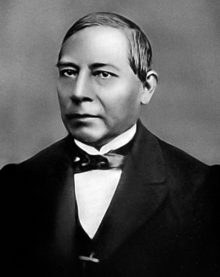
Benito Juarez, Mexico's only indigenous president, was of Zapotec origin from Oaxaca.


The smallest denomination of Mexican currency, but the most commonly used, is the 20 peso bill which features the statesman Benito Juarez, Mexico’s only indigenous president who was of Zapotec origin. Born into rural poverty in the southern state of Oaxaca, Juarez overcame a great many obstacles in his youth including being orphaned at age three. As a young man, he moved to Oaxaca City to study for the priesthood but left to study law, before moving into local politics. I say bravo to Benito Juarez!


A COUPLE OF CLOSING PHOTOS:

I couldn't help leaving Oaxaca and it's amazing Zapotec culture and traditions without two of my favorite closing tianguis photographs.


I like to think of this oxen as a willing beast of burden carrying his alfalfa hay home to enjoy after a day at the tianguis market.


Someone I know looks lost in the tianguis produce section and definitely ready to go home.


Thank you for joining me and my introduction to the Zapotec indigenous people of Mexico. I hope you have enjoyed and I look forward to seeing you again in the near future. Until then, I wish you well with wonderful adventures wherever your travels should take you. Saludos, Laura