Saturday, February 24, 2018

THE ARTS AND HANDICRAFTS OF MEXICO


México’s incredible tradition of Mexican folk art and handicrafts makes México a country like no other. Mexican arts and handicrafts are collectively called “artesanía” in Mexican Spanish. This term was invented during the 20th century to distinguish merchandise made by traditional methods versus those made by industrial or assembly line methods. México’s artesania tradition is a complex collection of items made with various materials and fashioned for utilitarian, decorative, and cultural celebrations including festivals and religious ceremonies.


Mexican craftsmen and craftswomen are heirs of a tradition which goes back to the Aztecs. Their pre-Hispanic skills included, but were not limited to, cutting and setting gems; making exceptional pottery; dying and weaving their own natural fabrics: and making musical instruments of exceptional quality.

 
After the Conquest of México by the Spanish in the 1500’s the Spanish introduced, among other things, skills and techniques which they had brought with them from Spain. Included were new materials such as wrought iron, the potter’s wheel, woolen fabric, and textiles made on the looms used in Europe at the time.


Every state in Mexico has developed its own history and customs depending on natural and cultural influences. Mexicans have a strong link with ancestral art. Traditional arts and crafts such as pottery, jewelry, woodcarving, and masks all come from their pre-Hispanic heritage.


Despite a rising tendency in industrialization, Mexican craftsmen continue to create new art and handicrafts (artesanias) often with the same tools and techniques developed hundreds of years ago. The merging of the Spanish and indigenous Mexican traditions has resulted in the wide variety of wonderful art and handicrafts that can be found only in México.


Mexican handicrafts range from common trinkets to masterful works of art and everything in between. The types of handicrafts which predominate in each region usually reflects the natural materials available locally such as woods, metals, textiles, leathers, yarns, clay, etc.


A good place to search for art and handicrafts is in the rural towns and villages where local people, known as artesanos, make their living by creating artwork. And when that is not possible, one can find an amazing selection of arts and crafts in any of the larger cities and, of course, in popular tourist destinations such as México City, Guadalajara, San Miguel de Allende, Oaxaca, and Puerto Vallarta.


The following are examples of Mexican art and handicrafts which I particularly admire:

HUICHOL ART

The Wixárika (Huichol) people are amazing artists. Inspiration for their fascinating and spectacular artwork and handicrafts comes from their complex belief system and the rituals that are part of their very existence.


Their fantastic yarn “paintings” and other ceremonial objects, including masks, are covered in tiny glass beads called chaquiras. I find their creations truly outstanding. The following link will take you to one of my previous blog postings on the art and culture of the Wixárika (Huichol) people.

HUICHOL SHAMANISM AND ART


CERAMICS AND EARTHENWARE


Pottery in Mexico dates back to the pre-Colombia era although it was not until the Europeans arrived that techniques like the potter’s wheel were introduced. Ceramics is still the most practiced handicraft in México.


Regions tend to specialize in different materials. For example, Oaxaca is famous for its black clay and Puebla for its durable and very attractive painted Talavera. Diverse and present everywhere, pottery was linked in Pre-Hispanic times to the ritual celebrations and also to the needs of the everyday life.

BLACK CLAY POTTERY


Clay had been used for many years to create pottery, but it wasn't until the 1950s when a woman named Doña Rosa discovered some very unusual characteristics about the brown clay located in a mine in southern Mexico. What was so unusual about the clay was that it turned different colors, including black, when fired in different ways. The above photo is of Doña Rosa at 93 years of age who spent 83 years of her life making these beautiful ceramics. With our gratitude, gracias Doña Rosa!


This pottery technique has survived in Oaxaca since the pre-Columbian Monte Albán period. Originally just different kinds of pots were made from black clay. Now you can find other objects created from black clay which are also very attractive. The black color of the ceramic pieces comes from the soil which takes about a month to be cleaned and processed before use. Everything is done by hand and a single piece can take up to 20 days to complete.

MATA ORTIZ POTTERY


I consider the ceramic pots from the town of Mata Ortiz in the state of Chihuahua to be the "Rolls Royce" of the Mexican ceramic world. The entire town makes a living from their gorgeous pottery. Each piece is handmade with clay endemic to Mata Ortiz and then painted by hand with natural dyes from the region using paint brushes made from natural hair. Their work has been exhibited nationally and internationally and I considered it simply superb.

TALAVERA


In the 16th century, a group of European artisans arrived in Puebla. They combined their own pottery knowledge with that of the pre-Hispanic locals and created refined earthenware that is known as Talavera. Talavera ceramics are known for their colorful baroque style of design which is highlighted by applying cobalt and tin to the pieces giving it texture. Talavera can be found as both tiles and dishware and is very popular in traditional style Mexican households.


The pottery from Puebla was called Talavera de Puebla because it was intended to rival the Spanish pottery from Talavera de la Reina, a city near Toledo, Spain. The pottery from Puebla belongs to the majolica type having an earthenware body that is covered with a white lead glaze that is then painted with colored glazes. Established in Europe by Islamic craftsmen in Spain, this technique is the same for Italian majolica, French faience, and Dutch delftware.

ALEBRIJES


I consider one of the most unique handicrafts in México are the alebrijes which are handmade figures depicting fantastical animals and creatures. Each alebrije is an original and created with painstaking detail and amazing color.  Pedro Linares López was the creator of alebrijes as an art form in the early 1900’s and which he continued creating until his death in 1992. The tradition of alebrijes has been carried on in Oaxaca as his legacy by Miguel Linares, Paula García, Blanca and Elsa Linares.


The small alebrijes are hand-carved from pieces of copal wood in Oaxaca and painted in bright colors. The larger alebrijes are made by sculpting metal wires which are then covered in papier-mâché and beautifully painted in astonishing detail. Each alebrije is unique and extraordinary and definitely a collectors item.

A "flying" alebrije about to take off in the City of Oaxaca!

MASKS


The use of masks and costumes was an important part of Mesoamerican cultures long before the arrival of the Spanish. Masks had various uses, but always in connection with ceremony and ritual and especially in dance and processions. Masks were also used by high priests to incarnate deities. Funeral masks were reserved for the burials of the very elite and were works of art made of jade, shell, obsidian, hematite, and other precious materials of the time.


After the Spanish Conquest, mask makers began to incorporate symbols and stories from the Catholic Church. Today masks can be found in a vast and wide range including traditional Purepecha designs, Christian images, and political caricatures. There are also pre-Hispanic masks symbolizing death and the underworld.


Masks are a reflection of the creativity and imagination of the local mask makers who have been practicing their trade in Mexico for centuries. Today masked festivals and dances are most prevalent in areas of México with large concentrations of indigenous peoples. With the arrival of the Spanish and the Christian religion this tradition, far from being lost, has been revived especially as seen in the Day of the Dead celebrations.  LINK TO DAY OF THE DEAD POST


WEAVING: CARPETS AND WALL HANGINGS


Along with pottery, weaving is one of the oldest handcrafts in México. Although woven items can be incredibly utilitarian and practical, weaving is an art which also produces incredibly beautiful carpets and wall hangings. Today folk arts such as weaving are a living tradition in Mexico and a link to their ancestors.


Mexican weaving probably began with weaving grasses to form baskets. Weaving fabric using native fibers such as cotton, cactus, yucca, agave, and maguey was a widespread practice before the arrival of the Spanish. The indigenous people had learned to cultivate and process cotton to make cloth. They made dyes using insects, plants, minerals, shells, and animals such as the cochineal and shellfish.


The textile traditions of Oaxaca are centuries old. People settled in the Oaxaca Valley at least 6,000 years ago, cultivating maize, growing cotton, and weaving it into cloth after it was pulled and cleaned, spun and dyed. Today, all forms of textile art are found in and around Oaxaca city, her valley villages, and mountain hideaways. Traditionally, weaving especially on the backstrap loom, was considered to be women’s work.


Two types of looms are employed in the making are handcrafted fabrics, the pre-Hispanic backstrap loom and the introduced European foot pedal loom.  Indigenous Zapotecs and Mixtecs weave and embroider extraordinary cloth from wool and cotton on the fixed frame pedal loom and the backstrap loom. Teotitlan del Valle produces extraordinary hand woven wool rugs and should definitely be on your itinerary when visiting Oaxaca.

This incredible textile "portrait" was woven on a foot pedal loom which we saw in Oaxaca and which I find simply fantastic.


A Frida Kahlo woven wall hanging as seen on a recent visit to Oaxaca City, Oaxaca.

GOURDS


Gourds have a long history of being used for the creation of cups and other dishes especially those for the drinking of chocolate by Mesoamerican nobles of Pre-Hispanic Mexico. Gourds were also used to make storage containers and decorative items. Today lacquered gourds (jícaras from the Nahuatl language) are still popular, either as a decorative object or as an eating or drinking device.


Oaxacan folk art gourds are decoratively carved and often brightly painted or lacquered. Lacquering is one of Mexico’s oldest crafts. Prior to the arrival of the Spanish, lacquering was known in all of Mesoamerica from central Mexico into Guatemala including the areas of modern Oaxaca, Veracruz, Yucatán, Chiapas, Guerrero, and Michoacán.


In parts of Oaxaca, gourds are still decoratively incised by Mixtec people. Craftspeople carve gourd bowls from the rind of the fruit of the calabash tree which grows in the coastal areas of Guerrero and Oaxaca. Gourds are left to dry and then cut in half and placed in water until the interior rots. The hard rind is then cleaned out and smoothed before being carved, polished, and sometimes painted or lacquered. Quite an honor for the lowly and common gourd!

A Huichol beaded gourd bowl.  How perfect is that!


And gourds with shells make for great music at your next fiesta.

HUIPILS: TRADITIONAL WOMEN'S WEAR


The huipil is a kind of sleeveless “blouse” made of cotton or wool in a rectangular shape with an embroidered neck opening and armholes. Weaving remains very much influenced by its indigenous origins in the colors as well as in the making.The huipil is traditionally waist length in the state of Oaxaca and calf length in the states of Chiapas and Guerrero.


Traditional huipils, especially ceremonial ones, are usually made with fabric woven on a backstrap loom and are heavily decorated with designs woven into the fabric. They may also be embellished with embroidery, ribbons, and lace for a very special and spectacular effect.


Although huipils may often look similar to the untrained eye, they exhibit great variety according to the weaver's ability and the arrangement of specific groups of motifs and color. Contemporary Mayan women continue the tradition of fine weaving in the lovely huipils of Chiapas and Oaxaca in Mexico and in Guatemala.


The ancient art of backstrap weaving is still thriving and an entire contemporary industry has now developed around weaving and textiles. Numerous cooperatives and individuals produce shawls, bedspreads, bags, and clothing that have become popular with visitors and collectors from around the world.

The stunning huipils and trajes (a huipil and skirt ensemble) are beautiful as is this lovely senorita as seen in Oaxaca City, Oaxaca. 

THE HUIPILS OF MEXICO AND GUATEMALA

The following are a few of my favorite artists in Puerto Vallarta whom I have admired since moving here in 1996.  I consider their art iconic of this beautiful area.


Evelyn Boren


Evelyn Boren


Marta Gilbert


Marta Gilbert


Manuel "Lepe" Macedo


Manuel "Lepe" Macedo


Lee "Lencho" Chapman


Lee "Lencho" Chapman


Image result for the art of ada colorina puerto vallarta mexico

Ada Colorina

Image result for the art of ada colorina puerto vallarta mexico

Ada Colorina

When purchasing art works in Mexico it makes good sense to be prepared with some knowledge about how to spot genuine Mexican art in order to take home something that embodies the elements of a true art piece and not a mass-produced reproduction masquerading as true Mexican art.


The Puerto Vallarta "welcome" on its malecon boardwalk has been created in the artistic style of native born Manuel "Lepe" Macedo (see his art above) who painted in the Naïve style.

I think it an appropriate background to say thank you for visiting and I look forward to seeing you again in the near future.  Until then, wishing you happy travels and great art finds!   Laura

MORE PHOTOGRAPHS OF THE ARTS AND HANDICRAFTS OF MEXICO


Friday, January 12, 2018

THE LLAMAS OF SOUTH AMERICA


One of the most remarkable travel experiences I have had was the visit many years ago to Peru and the land of the Inca culture. I have shared this amazing adventure through two previous blog postings entitled  
THE INCA RUINS OF MACHU PICCHU and CUSCO AND THE SACRED URUBAMBA VALLEY.

In addition to the memories of visiting those two wonderful sites and areas, I fondly remember the emblematic animal of the region. Namely the llama. There was something regal and yet charming about this hairy four-legged creature with the big ears and eyes that entranced me. It was time to learn more about the llama and his three cousins which I look forward to sharing with you in this posting.  So let's the meet the llamas of Peru and South America!


First of all we must answer the question: Is it a llama or lama?


The Spanish word for “llama” is “llama” even though the name “llama” was originally a Quechua word of the indigenous people of Peru long before the arrival of the Spanish.   

In Spanish and English the word “llama” (the animal) has the same meaning. The one difference is that the word llama is pronounced “yama” in Spanish since double ll’s have a soft sound like in the English word “yard.”

A lama, on the other hand, is a title for a Tibetan or Mongolian Buddhist spiritual leader and monk of Lamaism. A prime example of a lama is the the Dalai Lama of Tibet


Got it? OK, let’s meet our four-legged llama (pronounced “yama”) of South America.


The llama is native to the high puna eco region of the South American Andes. Peru and Bolivia form the heart of this region with portions of Argentina, Chile, Colombia, and Ecuador forming the periphery. The llama is one of the four species known as New World camelids which inhabit this region which is characterized as a high treeless plateau. The other species are the alpaca, the guanaco, and the vicuna. All four species are thought to have originated from a common North American ancestor who is also the supposed predecessor of the African and Asian camels.


The name llama (which was also spelled 'lama' or 'glama' in the past) was adopted by European settlers from native Peruvians. Southerly migration into the South American Andes formed the ancestry of the guanaco and vicuna which adapted to the harsh climate, sparse moisture, high elevations, large daily temperature fluctuation, and unpredictable food supply of the region.


About 12,000 years ago the lama genus (guanaco, vicuna, domestic llama and alpaca) appeared throughout South America and was the leading herbivore in that part of the world as it would remain until a century after the conquest of Peru in 1532. 

New research has confirmed that, while the alpaca was bred by the Incas out of a Vicuna ancestor, the llama was bred by the Incas from a Guanaco ancestor. All four of these animals are members of the camel family, but the rare and endangered Vicuna is famous as the animal with the finest fleece in the world.


Before the Spanish conquest of the Americas, llamas and alpacas were the only domesticated ungulates (hoofed animal) of the South American continent. They were kept not only for their value as beasts of burden, but also for their flesh, hides, and wool. As a result of evolution llamas can thrive at elevations of 12,000 to 14,000 feet above sea level and are a hardy, durable, and low maintenance animal.


The Inca culture (approximately 1200 to 1532 AD) which had not yet discovered the wheel, relied upon the llama to carry trade goods, produce, and military supplies throughout their empire.The key role that llamas and alpacas played in the Inca culture and economy elevated them to a highly regarded status. The domestication of the llama and alpaca marked the beginning of a high dependence on these animals by the Inca culture of the Andes.


Domestication allowed the llamas to be used as a beast of burden as well as selective breeding for other specific traits. The llama was bred specifically to produce a large, strong animal for the packing function.The llama's adaptability and efficiency as a pack animal in the mountain terrain of the Andes made it possible to link the diverse altitude zones and to cover the great linear distances of the region.


The llama surveying his majestic Andes and Machu Picchu.  How simply wonderful!  


The reign of the llama and alpaca in the Andean region ended abruptly in the early 1500's with the Spanish conquest of that region of South America. The Spaniards initiated their colonization with the systematic destruction of the llamas and alpacas and replaced them with their own domestic species which was principally sheep. Baa, baa black sheep!


Llamas typically live for 15 to 25 years with some surviving 30 years or more.They are very social animals and live with other llamas as a herd. The wool produced by a llama is very soft and lanolin-free. Llamas are intelligent and can learn simple tasks after a few repetitions. When using a pack, they can carry about 25 to 30% of their body weight for 8 to 13 km (5–8 miles).  


Over 6300 years of selective breeding for gentleness have made llamas the safest and easiest to train pack animals in the world. The Aymara Indians who live near Lake Titicaca in Peru and Bolivia call the llama a "speechless brother" because only a brother would carry the burdens they do without complaint!


As of 2007 there were over seven million llamas and alpacas in South America and due to importation from South America in the late 20th century there are now over 158,000 llamas and 100,000 alpacas in the United States and Canada.


The llama continued its obscure existence until about 30 years ago. The Andean countries, especially Peru and Bolivia, have recently recognized the importance of native camelid species in their cultures and have begun to restore them to their rightful place as the preferred inhabitants of their varied landscape.


The alpaca has led in this resurgence because of its desirable fiber. Strong world demand has fostered growth of an economically significant industry and, more importantly, has caused these Andean countries to recognize all the camelid species which include the llama, guanaco, vicuna, and alpaca as unique to their region and as a part of their heritage. As a result the animals are once again viewed as a national treasure to be protected and promoted. Bravo!


"It might be diminutive in stature, but this llama tells of a large portion of history. The miniature figurine, wrought from hammered gold, would have been offered as an addition to the human sacrifices that the ancient Inca people were known to have made to their mountain gods.

This statue has been dated to around 1500 AD. Measuring approximately 2.4 inches this gold llama gives us an insight into the culture of the Inca tribes that lived in the Peruvian Andes which had a vast empire reaching more than 2,400 miles along the length of the Andes mountain range. The Inca revered gold believing it to be the "sweat of the sun" and that it represented the sun’s regenerative powers. All gold belonged to the ruler, the supreme Inca himself, who claimed to be descended from the sun god.

Llamas were the Inca’s most important domesticated animal providing food, clothing, and acting as beasts of burden. They were also often sacrificed in large numbers to the gods. This llama is important because very few Inca gold figures have survived. After colonization the Spanish melted most of the gold figures down and used the resulting gold for their own wealth."  SOURCE


I believe this small gold figure of a llama was a fitting offering for an Inca mountain god. It can be viewed at the wonderful Museo de Oro (Gold Museum) in Lima, Peru. I thank the gods, that not all of the llamas were sacrificed to extinction!

The following are some of my llama "amigos" who thank you for your visit: 


Until next time, thank you for visiting  MEXICO AND BEYOND: LAURA'S PHOTO JOURNEY and I look forward to seeing you in the near future. Until then, wishing you happy trails and grand adventures.



Sunday, November 19, 2017

THE SEA TURTLES OF PUERTO VALLARTA AND MEXICO


One of the biggest surprises of living in Puerto Vallarta has been my exposure to the local animal wildlife. Since Puerto Vallarta has quite a well-deserved reputation for its wild nightlife getting to know and learn about the non-human wildlife inhabitants has been an unexpected benefit of living in this beautiful part of México. The creatures with which we share the planet I find fascinating.

I have also learned a lot from researching some of them in order to create my blog posts which includes the IGUANAS, PELICANS , and DONKEYS . I unashamedly admit to having had slight “affairs of the heart” with them including even the iguanas!


But nothing has touched me as much as the sea turtles. Maybe it’s because I have held them in my hands within a day or two of their hatching and their release to the great big sea of life. Whatever the reason, I find them a fascinating creature and I look forward to sharing them with you in this posting.


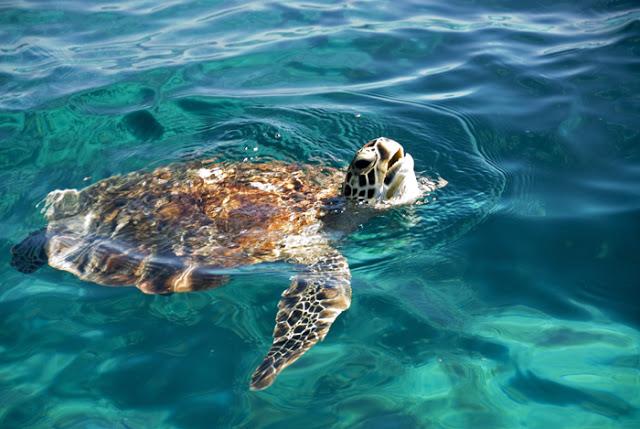
Marine turtles are some of the oldest creatures that have ever existed on earth with some 200 million years of evolution. Evidence from Prehistoric times indicate that marine turtles were much larger than their contemporary relatives and measured up to 13 feet in length with a wingspan of up to 16 feet. These were some serious dinosaur-sized turtles! 


The beaches of Mexico are breeding areas for seven of the eight marine species of turtles. The following are the most common species found in Puerto Vallarta:

Olive Ridley turtle, or "Golfina (Lepidochelys olivacea)

Leatherback (Dermochelys coriacea)

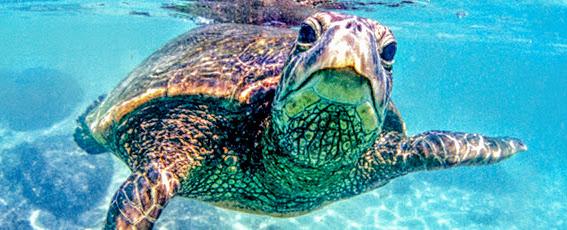
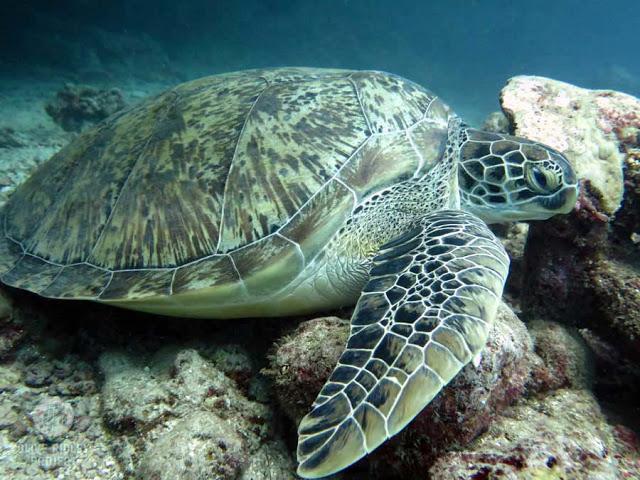
Green turtle (Chelonia agassizii)

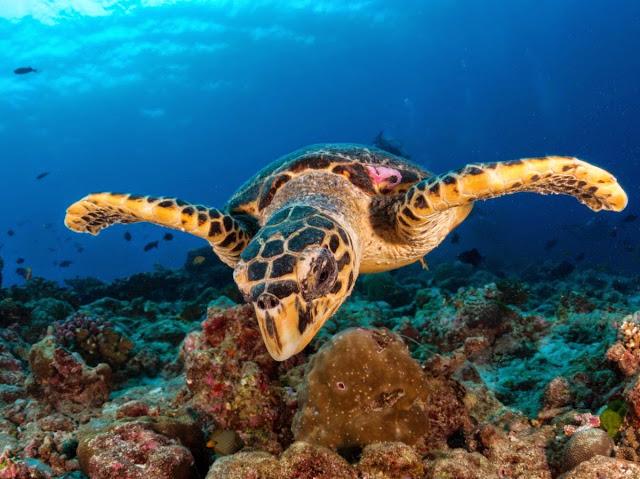
Hawksbill (Eretmochelys imbricata)

All 8 species are in danger of extinction and 7 of them come to nest on Mexican beaches. Natural predators have been around for thousands of years, but it is the impact of humans which is affecting their numbers either through hunting, pollution, development on beaches, or entanglement in fishing nets.


Since we are fortunate to live on a beach in Puerto Vallarta on the Bay of Banderas we have the privilege of sharing the environment with the Olive Ridley turtles. There are 12 beaches where Olive Ridley turtles nest around the world according to Mexico’s National Commission of Natural Protected Areas (CONANP).


A baby turtle release at sunset is always a special event.

The most important breeding grounds for the Olive Ridley turtle in Mexico are distributed along the western central Pacific Coast including the Sea of Cortez with approximately 200,000 nests per year. The endangered Olive Ridleys, whose numbers worldwide have plummeted in recent decades after mass exploitation, are one of the smallest sea turtles weighing an average of not more than 100 pounds (45 km) and reaching a length on average of not more than 2 feet (65 cm) as adults.


The good news for the Olive Ridley who was struggling to survive as a species as recently as 15 years ago is now making a comeback in México thanks to the protection of both government agencies such as CONANP (The National Commission of Natural Protected Areas), military forces, and private organizations, groups, and their supporters.


The Mexican government notes that egg poaching still occurs, but great strides are taking place to curb this illegal practice where turtles are commonly found nesting. Drones have even been put in place to monitor critical nesting habitats in the state of Oaxaca. Bravo!


Sea turtles travel thousands of miles between feeding and nesting grounds. Once they reach sexual maturity between 8 and 12 years of age the females return to the same beach where they were born in order to lay their own eggs. It appears to be part of their genetic material to return to their place of birth. I find this simply astounding!


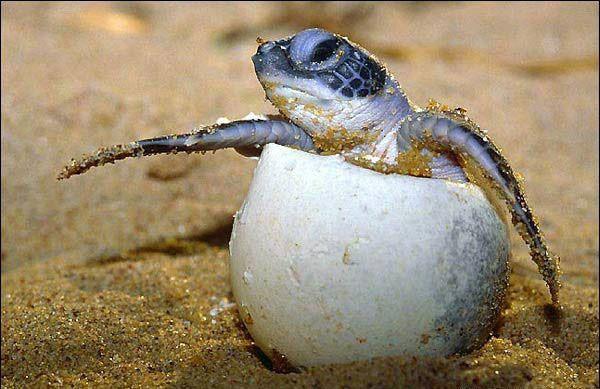
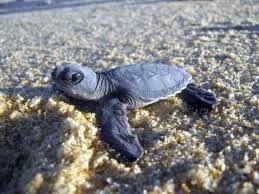
Once they hatch, the tiny black baby reptile turtles haul themselves to the sand’s surface and painstakingly crawl to the sea. Small enough at birth to fit into a child’s palm, females sea turtles return to land as adults in order to reproduce. Male sea turtles, however, never return to their place of birth and spend their entire lives swimming the oceans. Studies indicate that for every thousand baby turtle hatchling only one will make it to reproductive adulthood which translates to only one (1) percent!


I also find it interesting that there is a 8 year period between a turtle’s birth until they reach sexual maturity which are referred to as the “lost years” where very few turtles are seen. It is speculated that since the baby turtles are not yet strong enough to use the ocean currents to get them from the breeding to the feeding grounds that the currents actually carry them far away from known concentration areas. Because these same currents also carry a multitude of organisms that are on the turtle's diet it is suspected that they can feed relatively easily.


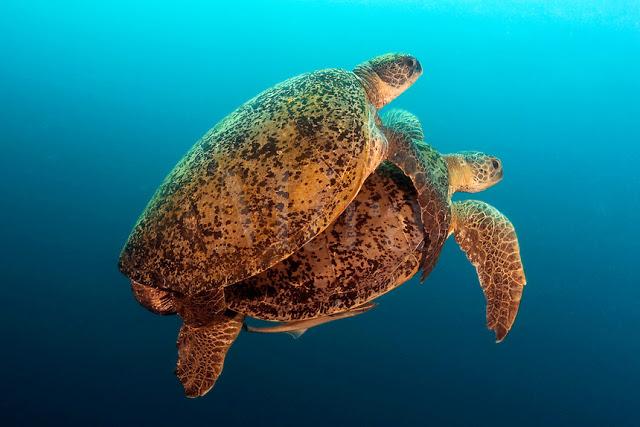
Mating between marine turtles occurs principally near the surface of the ocean and close to the nesting beaches or along the migratory routes and is not often observed. After the coupling is over, the partners will usually swim away separately.


The reproduction season here in Puerto Vallarta on the Bay of Banderas begins in June and ends around December with the highest percentage of nestlings from July to September. Another interesting fact is that the sex of the hatchling isn't determined in advance by a gene, but rather by the temperature during the incubation period. 

For the Olive Ridley turtle, incubation temperatures around 30° Celsius or 86°Fahrenheit will produce about half males and half females. Temperatures above 30°Celsius or 86°Fahrenheit will produce more females and the opposite occurs at lower temperatures.


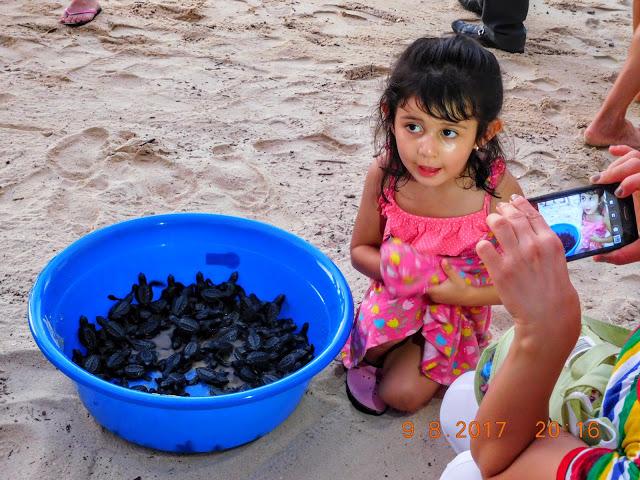
Here we have three buckets of baby turtles which will soon face the challenges of the ocean for the first time.

The reproductive cycle of the sea turtle is usually annual, but in some cases turtles may reproduce and nest every 2 or 3 years. It appears that those turtles who travel furthest during migrations reproduce less often than those residing near the nesting sites where they may reproduce almost on an annual basis.


Once the female is ready to lay her eggs she will wait for a quiet time when disturbance is at a minimum. Sea turtles are cold blooded and cannot regulate their body temperature. Because of this they most often choose the night to lay their eggs. Night also offers these turtles better protection from predation and the rainy nights during summer seem to be as good a time as any.


The quantity of eggs laid by a female turtle is higher on the first nestlings and reduces on the subsequent ones. For example a turtle laying 3 times may produce 130 eggs the first time, 90 eggs the second time, and 60 eggs the third time. 

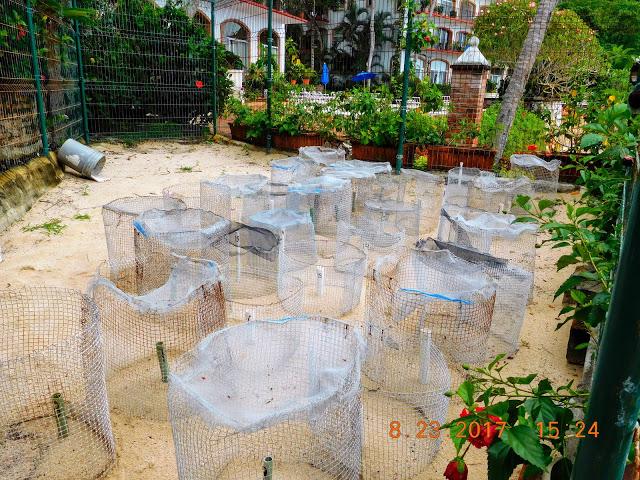
Of course, these numbers are just an example and they may also vary according to weather, depredation, disturbances and level of health of that specific turtle. The following photo is of our turtle egg "sanctuary" where they incubate until hatching.


This is one of the turtle "sanctuaries" where the turtle eggs are protected from predators until they hatch. 

The egg size is that of a ping pong ball which is perfectly round and quite soft. These soft turtle eggs allows the female to drop them into the nest dug in the sand without cracking them.The incubation period varies relatively from region to region, but here in the Banderas Bay region the incubation period is approximately 40 to 50 days.


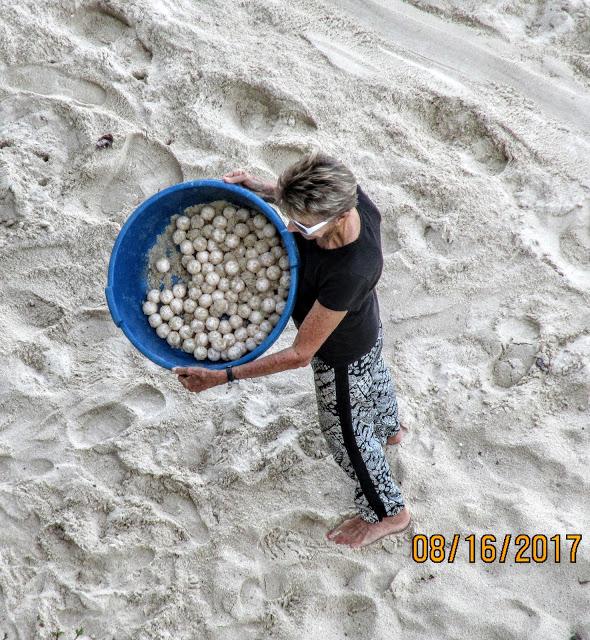
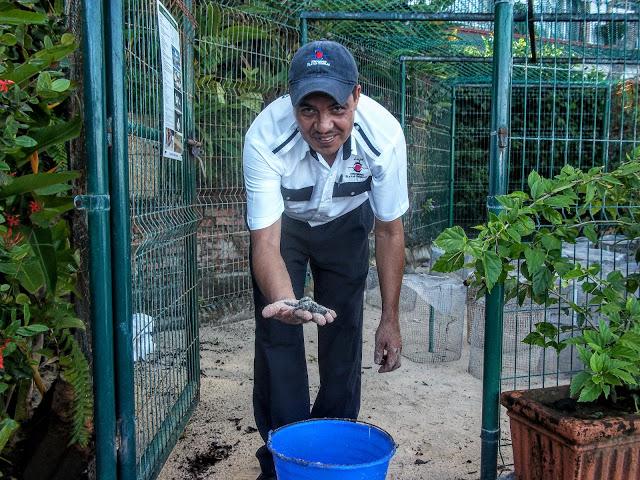
Turtle eggs are collected for protection in the "sanctuary" until they hatch.

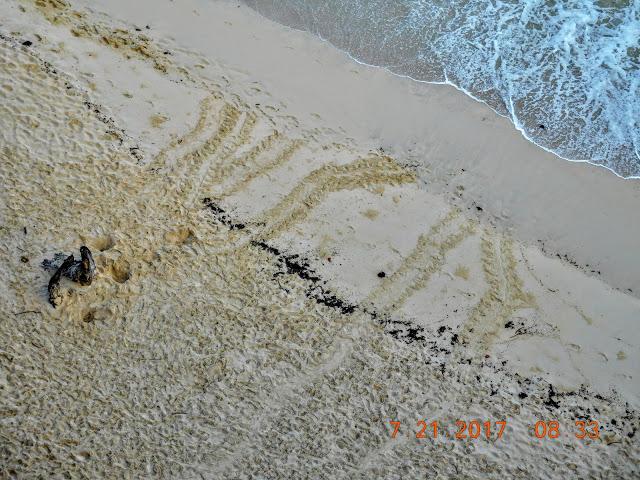
Each morning during the turtle season before our coffee is brewed my husband and I will go out and look for turtle tracks in the sand. When we see the tracks we know that our beach has been visited during the night and a future generation of turtles have been left behind for incubation and hatching. It always makes us smile.

 
Tracts left by the female turtles during the night when they come ashore to deposit and bury their eggs.


The Olive Ridley turtles, as with many other species of marine turtles, encounter numerous threats throughout their lives. Also during the egg stage, the predator list may include animals such as dogs, jaguars, foxes, pigs, ants, and crabs. We are proud to have a rescue and sanctuary program where we live for the sea turtle. Each morning when there is evidence that eggs have been left behind in nests for incubation they are gently retrieved from the nest and placed in a protected environment until they hatch.


The tiny baby turtles will be released within a day of their hatching.

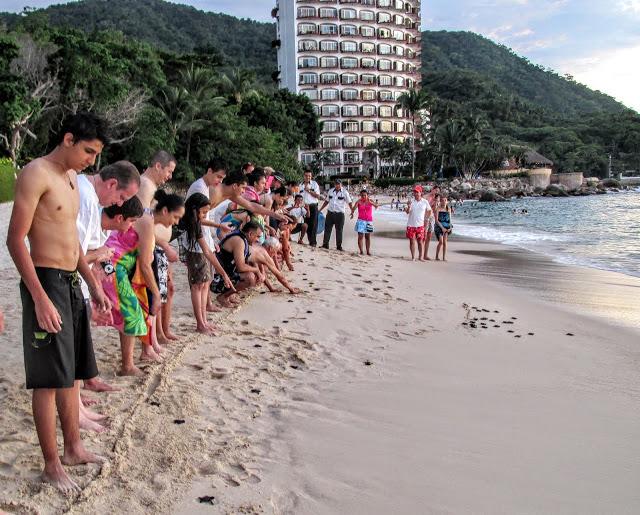
When they hatch there is an evening ceremony where we participate in their release to the ocean for the beginning of their seagoing lives. It is quite a touching experience and one of which we never grow tire. The following two photographs are at sunset when the baby turtles are released. Good luck little ones!

Locals and visitors alike participate in releasing the baby turtles before the sun sets.

Good luck little ones!

During the early stages of life, until they reach adulthood, sea turtles are also at the mercy of predators such as birds (including the magnificent frigate birds and pelicans) and fish. Sharks and killer whales are their main natural predators when they reach adulthood if they make it to that stage at all. Being born a sea turtle is quite a challenge and not one that I envy!


It is said our future lies in the hands of our children. On your next vacation or visit to a sea turtle area I suggest you take yourself and your children to a turtle camp. There you both can learn about these marvelous creatures of the ocean. Participate in a baby turtle release program and get the experience of a lifetime. 

There is nothing much more touching than holding a baby turtle in your hand, giving it a name and a kiss, wishing it luck on it's tough journey, and watching it make its way to its home: the great big sea of life.

 
An experience not to be forgotten regardless of age.


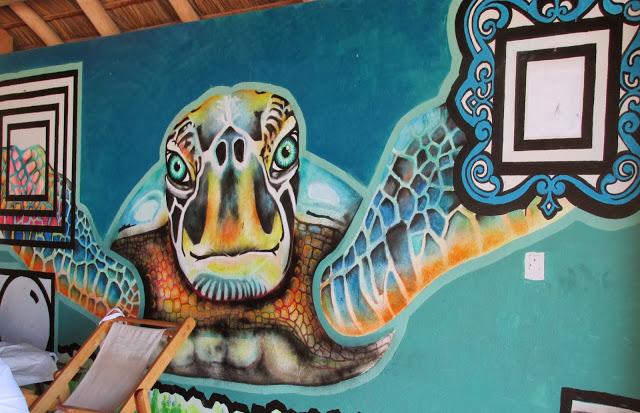
I am particularly fond of this mural in Puerto Vallarta's Old Town area.

Until next time, wishing you well from the sea turtles in Puerto Vallarta and Mexico. I hope you enjoy this blog posting and please do not hesitate to share it with your family and friends. Saludos, Laura


PS The following two videos were taken recently when we surprised a turtle while snorkeling and during one of the baby turtle releases. Simply click on the arrow in order to view the videos.


Unfortunately for this turtle we disturbed her meal while snorkeling and she immediately "flew" away.


Hundreds of tiny new hatchling turtles scramble to the sea and I wish them much luck!