Sunday, March 3, 2019

THE QUECHUA INDIGENOUS PEOPLE OF THE ANDES


Welcome to MEXICO AND BEYOND: LAURA’S PHOTO JOURNEY. I have chosen the Quechua culture to be the first of my blog postings on the indigenous peoples of Latin America. This choice is no doubt inspired by my fond memories of visiting Machu Picchu, Cusco, and the Urubamba Valley of Peru and the Otavalo region of Ecuador many moons ago. I look forward to your company so let’s meet the Quechua.


A few introductory Quechua basics:
PRONUNCIATION: KECH-wah
LOCATION: Peru; Ecuador; Bolivia (Central Andes regions)
POPULATION: Approximately 7.5 million
LANGUAGE: Quechua language
RELIGION: Combination of Pre-Columbian and Roman Catholic beliefs


The Quechua Indians of the central Andes are the direct descendants of the Incas. The Inca Empire which existed for a century before the arrival of the Spanish was a highly developed civilization. The Inca Empire stretched from parts of present-day Colombia in the north to Chile in the south.


Peru attained independence from the Spanish in 1821 and most Quechua still live in the Andean highlands. They rely on subsistence agriculture growing little more than their own food and nomadic herding much as did their Inca ancestors.


About one-third of Peru's 24.5 million inhabitants are Quechua Indians. Migration and urbanization in the past few decades have drawn many Quechua to Lima which is the capital of Peru and there is now a large indigenous and mestizo (mixed-race) population in Lima.


Most Quechua rely on subsistence farming for their livelihood. Corn, potatoes, and grains are crops that have adapted to the high-altitude environment and are the two of the main staples of the Quechua diet.


Land is still farmed using the Inca method of terracing on steep slopes. This labor-intensive approach to agriculture requires a tremendous amount of time. Common dishes include meat or potato stews, spiced with hot peppers, coriander, or peanuts. Considered a delicacy, guinea pig is an important source of protein for the Quechua which predates the Incas.


The Quechua language with 25 million speakers is spoken in ten countries in Latin America and is an official language in three of them. Quechua was also once the language of the great Inca Empire. Many of the ancient Quechua myths are still preserved in their oral tradition. Most of them narrate the origin of various ethnic groups and tales of the mountains, rivers, and lakes.


Quechua religion combines both Pre-Columbian and Catholic elements. The most significant Pre-Columbian influence that endures is the belief that supernatural forces govern everyday events such as weather and illness. This belief serves a utilitarian purpose to the agricultural Quechua.


By making offerings to the powers that control natural forces, the Quechua feel they can influence events and not merely be helpless in the face of bad weather or disease. When drinking alcohol, for example, it is customary to first offer a drink to Mother Earth Pachamama.


The Quechua celebrate important Catholic holidays such as Christmas and Easter. But at the same time they have not abandoned their ancient holidays. In the ancient Inca capital of Cuzco (also spelled Cusco) the Inca Sun Festival is still celebrated.


Donning replicas of Inca tunics, rather than contemporary Andean garb, Quechua Indians reenact the Inca sun-worshiping ceremony. The Inti Raymi festival, which celebrates the June solstice, reflects the Inca's vast knowledge of astronomy. On this occasion, there is much eating, drinking, and dancing. True to Inca traditions, a llama is also sacrificed on this day.


Major life transitions, such as birth, puberty, and death are marked by rituals and celebrations that combine Catholic and indigenous traditions. Courtship and marriage involve a lengthy series of rituals and stages. At the wedding there is a public procession as the bride leaves her home to join her husband's community. Various other rituals, including fertility rites, follow the wedding.


Children in Quechua society play many important roles. From a very young age they participate in economic activities and key household tasks. As in most other subsistence economies, children are essential as they are expected to provide long-term economic security to their parents as they age.


Women play a subordinate role to men in the community political structure. Women are less likely to receive a formal education, do not hold significant positions of power within the community, and are excluded from many potentially profitable economic activities. A clear sexual division of labor exists with regard to both agricultural and household tasks.


Traditional Andean clothing reflects Spanish influences. In 1572 the Spanish prohibited the Quechua from wearing native Inca tunics and wrap-around dresses. Andean peoples then adopted the clothing still in use today. Quechua women wear skirts and blouses with colorful woven shawls around their shoulders. Men wear trousers, shirts, and woven ponchos (capes). Sandals are the preferred footwear for both men and women.


The style and color of clothing worn by Quechua Indians varies dramatically from region to region. The Otavalo of Ecuador, an important subgroup of the Quechua, have a very distinctive dress. They wear white trousers and shirts, covered by a solid black poncho. Otavalo men are also famed for their long black braids.


Formal education in Peru is required until the age of sixteen. In rural areas, however, the percentage of students who finish their schooling is much lower than in urban areas. This is in part because children play a valuable role in household and agricultural work and often their labor cannot be spared.


The characteristic music of the central Andes is called huayno which recounts daily life in mountain villages and proclaims Andean nationalism (patriotism). Traditional instruments which are still used include drums, flutes, and the charango, a mandolin-style guitar made from an armadillo shell.


Huayno singers are increasingly popular in urban areas. Quechua folk music also includes beautifully haunting music for panpipes (hollow pipes of graduated length). One of these songs, "El Condor Pasa," was a hit record for the American singing duo Simon and Garfunkel in the 1960s which I remember well!


As the Incas did not write there is not a tradition of Quechua literature. In the twentieth century Peru, however, there has emerged a tradition of writers who focus on the life of the indigenous Andean peoples. Jose Maria Arguedas, Cesar Vallejo, and Ciro Alegria have written influential books that portray the oppression of the Quechua throughout the centuries and chronicle their hard life in the Andes. These authors have contributed to a growing Andean nationalism and pride.


The most significant handicraft produced by the Quechua is textiles. Women throughout the Andes can be seen spinning wool most of the day even while sitting at the market or waiting for a bus. Both llama and sheep wool are used. The "belt loom" is still in use by the Quechua and predates contact with Europeans. The Quechua are very skilled weavers and their products are increasingly in demand for the tourist and export market.


I have very much enjoyed sharing the Quechua indigenous people of the Andes region with you and I am looking forward to sharing more indigenous cultures of Latin America in future blog posts. So until then from Otavalo, Ecuador my thanks and best wishes to you wherever your adventures and travels may take you! Saludos,  Laura


Friday, March 1, 2019

BLOGGING: WHAT IT'S ALL ABOUT


When my husband suggested a few years ago that I start blogging I had very little understanding of what a blog was let alone what blogging entailed. What I now realize is that he was suggesting a project to keep me occupied wherever we were living at the time. With hindsight I believe neither of us had any idea of how consuming this blog gig could become.


Blogging has definitely become my creative outlet and I enjoy the entire process from choosing the subject, to researching background information, to writing the post, and sharing our photographs and their memories. So when my husband teases me that he created a blog monster, I simply respond “well, it was your idea” and I then I thank him very much for this wonderful gift. 


I think a good place to start is by defining the whole concept of blog, blogging, and blogger in order that we can be on the same page. Here is a little snap lesson on blog terminology to get us started:


Blog is a short form for the word “weblog” and the two words are used interchangeably. As often happens in the English language, many derivatives of the word blog have been created. One who participates in the activities of maintaining a blog is known as a blogger and the activity of keeping a blog is known as blogging. So we could say that the blogger blogs in his blog!


The following terms will define and help in explaining what the whole blog thing is all about:

Blog (noun): a journal that is on the Internet for others to read and see.

Blogger (noun): a person who keeps a blog. Bloggers are revolutionizing the way news and interests are shared.

Blog (verb): The action of writing a blog. Blogging is my way of sharing my interests with the world. Even Snoopy is into blogging!


I wonder who Snoopy is writing. Maybe Jim who suggested he start blogging?

Many people are still confused over what constitutes a blog over a website. Part of the problem is that many businesses use both, combining them into a single web presence. But there are two features of a blog that set it apart from a traditional website.


Paco Bear is my blog helper and I couldn't do it without his support!


Whether it's a “lifestyle travel" blog like MEXICO AND BEYOND: LAURA'S PHOTO JOURNEY where I share experiences of living all over the maps of Latin America, or a food blog sharing new recipes, or a business providing updates to its services, blogs need to have new content added often and on a fairly regular basis.


Blogs also allow for reader engagement. Blogs are often included in social media because of the ability for readers to comment and have a discussion with the blogger and with others who read the blog which makes it “social.” The success of blogging comes from having people return and they only return when there is new content to read. Blogging requires a good deal of time, but I find the entire experience very rewarding.


After three years of blogging I was becoming concerned that I would shortly run out of new experiences to share. I then realized that sharing the cultures, traditions, and other aspects of the previously posted countries opened up new and more exciting possibilities for my blog. And with this new direction I am enjoying the whole blogging experience more and more.

WHAT IS A VISUAL BLOG?


The term for my type of blog is Visual Blog, but the term Photo Blog is also widely used. A blog that shares information and is highlighted with visual/photo images is a Visual Blog and my blog MEXICO AND BEYOND: LAURA'S PHOTO JOURNEY definitely qualifies under this definition as is evident in its name.

A Visual Blog post is easily identified as the the text is supported by a number of images rather than a few images supporting the text. Visual images are used to tell a story or deliver information hopefully in an interesting and attractive manner. I rely primarily on the many, many photographs we have taken over the years of living our “nomadic” lifestyle.


In addition, I am now using new forms of visual images including enhanced photographic effects, GIFS, and still motions for added interest. I just might be on the verge of being called a “techno geek” in this regard thanks to my techno wizard of a husband and I am loving it. It has definitely added to my blogging experience and I hope my blog readers are benefiting from it also.


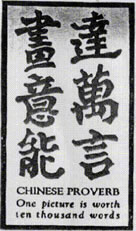
I believe the English language idiom “a picture is worth a thousand words” is very valid and it is certainly what my blog is all about. It refers to the concept that an idea or thought can be conveyed with just a single still image or that an image of a subject conveys its meaning or essence more effectively than a description does. A very similar sentiment is expressed in the Chinese proverb: “One picture is worth ten thousand words.” I am just thankful that I never had to learn Chinese characters or I probably would never have become a blogger!


Busy fingers and a fast mouse make for happy blogger hands!


Although our lifestyle has become that of "normal occasional travelers" and no longer "full time nomadic wanderers," I continue to click away on my camera for future blog postings. There is still much out there to discover and share and I am as enthusiastic as ever.


Until we meet again, I will keep on clicking images and typing text both of which give me great pleasure in this blogging gig. The following technology illustrates both collages and animated photo albums. I hope you think they are as cool as I do.

With my thanks, appreciation, and best wishes for happy travels wherever they may take you. Saludos, Laura

Sunday, February 17, 2019

AN INTRODUCTION TO THE INDIGENOUS PEOPLES OF LATIN AMERICA


The indigenous peoples of Latin America are the pre-Columbian peoples of Latin America and their descendants. Many parts of Latin America are still populated by indigenous peoples with the following countries having sizable populations: Bolivia, Chile, Ecuador, Guatemala, Mexico, and Peru.


Yucatan, Mexico

Between 2000 BC and 300 BC complex indigenous cultures began to form in Mesoamerica some of which matured into advanced pre-Columbian civilizations such as the Olmec, Izapa, Teotihuacan, Maya, Zapotec, Mixtec, Huastec, Purépecha, Totonac, Toltec, and Aztec which flourished for nearly 4,000 years before the first contact with Europeans.


Antigua, Guatemala

At least a thousand different indigenous languages are spoken in Latin America. Some including the Quechua languages, the Mayan languages, Nahuatl, and Aymara count their speakers in the millions. Many indigenous peoples also maintain aspects of their native culture including religion and social organization.


Cuenca, Ecuador

Like most cultures over time indigenous cultures have evolved to incorporate their traditional customs to accommodate modern needs. Some indigenous peoples, however, still live in relative isolation from Western culture and a few are still counted as “uncontacted peoples” which refers to isolated peoples or tribes who live or have lived, either by choice or by circumstance, without significant contact with “modern” civilization.


Oaxaca, Mexico

Cultural practises in Latin America seem to have been shared mostly within geographical zones where distinct ethnic groups adopted shared cultural traits, similar technologies, and social organizations. An example of such a cultural area is “Mesoamerica” where coexistence and shared development among the peoples of the region has produced a fairly homogeneous culture with shared social patterns, religious beliefs, art, architecture, and technology for more than three thousand years.


Santiago Sacatepéquez, Guatemala

Although some indigenous societies still depend heavily on agriculture in some regions, the indigenous people and their civilizations are credited with the building of pyramid-temples, mathematics, astronomy, medicine, writing, highly accurate calendars, fine arts, intensive agriculture, engineering, an abacus calculator, and complex theology. 


Urubamba Valley, Peru

For much of its history, the majority of Mexico's population have lived an urban lifestyle in cities, towns, and villages. Only a fraction of the population was tribal and wandering. Most people were permanently settled, agriculturally based, and identified with an urban identity as opposed to a tribal identity. Mexico has long been an "urbanized land" which was graphically reflected when the Spaniards encountered the indigenous people during their arrival in the "New World."


Cuenca, Ecuador

This is my brief introduction to the indigenous peoples of Latin America. My plan is to share a number of specific indigenous groups of Latin America in individual blog postings which will include the following groups: Huichol, Zapotec, Quechua, Mapuche, Maya, and Mixtecs. And if that is not enough, I have decided to also create a series of blog postings on the Aztecs of Mexico who have become more than a slight obsession with me.


Oaxaca, Mexico


Montezuma II was the ninth king of the Aztec Empire and has become my inspiration for a series of blog postings on the Aztecs of Mexico.


Chiapas, Mexico 


San Miguel de Allende, Mexico 


 Otavalo, Ecuador

I am very excited about this adventure and I look forward to sharing the indigenous peoples of Latin America with you. In the meantime, here is the link to my very large photo album entitled THE INDIGENOUS PEOPLES OF LATIN AMERICA to wet your appetite for more!

PS Please remember to click on the first photo when you open the photo album and then click on the "burger" and select slide show if you prefer for viewing. And, of course, you can manually view each photograph if you so choose. 


Until next time, wishing you wonderful travels and adventures wherever the road may take you. Saludos, Laura


Sunday, February 3, 2019

A BLOGGING ANNOUNCEMENT


WELCOME TO MEXICO AND BEYOND:  LAURA'S PHOTO JOURNEY

After blogging for almost five years I have decided to start a series of blog posts focusing on the indigenous peoples and their cultures of Latin America including the countries of Mexico, Guatemala, Ecuador, Peru, and Argentina where we either lived or had extended stays during our "nomadic years."

My husband suggested this new theme and since he is the one who inspired me and has supported me on this blogging adventure I trust his advice. I was ready for a change and a challenge and I am very excited.

Since my great love has always been cultural anthropology and sociology this will also be a great way to get back to my passion.  And in the process I will hopefully learn a lot more about the indigenous peoples and their cultures which I wish I had known during our years living in and exploring Latin America.

I am very excited about this new blogging focus and I hope you will enjoy it also. Any suggestions or comments are always appreciated and I look to seeing you in near future.  In the meantime, here are a few of my favorite photographs of the indigenous peoples of Latin America.


     Panajachel, Guatemala


      Oaxaca, Mexico


   Chichicastenango, Guatemala


   Cuenca, Ecuador


                       San Miguel de Allende, Mexico         


     Bariloche, Argentina


                   Cusco, Peru


                       San Juan Sacatepéquez, Guatemala


   Yucatan, Mexico 


                     Lago Atitlan, Guatemala

The following link with take you to my photograph album with special emphasis on the countries of Guatemala, Ecuador, and Mexico.

THE FACE OF LATIN AMERICA

In order to view my album, please remember to open the above link and click on the first photograph, and then click on the "burger" on the upper right right hand corner for a slide show.  Believe when I say I am working with the Google "photo gods" to try to make this easier in the future! 


Until next time, wishing you wonderful travels and adventures wherever the road may take you.  Saludos, Laura