Friday, January 1, 2021

AN INTRODUCTION TO OUR GARROBO AMIGOS


I admit to having more than a small fascination with our local garrobos. I find them immensely fascinating and I look forward to introducing you to this interesting species. So if you are ready, here we go.

I visit them each afternoon while taking a "reading for pleasure break" at what we call the grotto.  The local garrobos come to visit expecting some vegetarian leftovers which I bring them as treats. 


We have three garrobos which is I assume are related.  The old man I have named Stumpy, the younger male I have named Stanley, and the female I have named Stella.  Our garrobos seem to recognize me by sight or maybe it's by smell. 

                             
We have nicknamed Stumpy our oldest Garrobo "the Dinosaur" because he looks like he comes from prehistoric times. 

Spiny-tailed iguanas (Ctenosaura) commonly known as the black spiny-tailed iguana, black iguana, black ctenosaur, and garrobo is a lizard native to Mexico. This genus is part of the large lizard family native to both Mexico and Central America.

Locals often point to this reptile as an"iguana" and another as a "garrobo" with complete assurance although the untrained eye might see no obvious difference. In fact they are distinct species although both are called iguana in English and both belong to the Iguanidae (Iguana) family. 

Garrobos, also named Spiny Iguana or Black Iguana, have several lines of spines on their tail while Iguanas do not. Male Iguanas turn red-orange color when they are going to mate and Garrobos become light turquoise. Garrobos are more common probably because they are omnivores which is defined as an animal who has the ability to eat and survive on both plant and animal matter.


Every time I look at this old photo I feel as though our old "Garrobo Stumpy" is laughing at me! Our guess is that Stumpy is between 20 and 25 years of age and he still has a sense of humor.  
                            
And last, but not least in my humble opinion, garrobos also qualify as the "FASTEST LIZARD ON EARTH." According to the Guinness Book of World Records Garrobos are the world's fastest lizard with a maximal sprint speed of 34.6 km/hour or 21.49 miles/hour. That rates a big wow in my book.  


And Stumpy our "dinosaur" simply loves star fruits, but he is definitely not the neatest of eaters. 

Male garrobos are capable of growing up to 4 feet 3 inches in length and the females are slightly shorter at 3 feet 3 inches in length.  The males have a crest of long spines which extends down the center of the back. 

             
Stumpy is a voracious vegetarian and I feel guilty if I don't bring him a daily treat. 

Although coloration varies among individuals of the same species adults usually have a whitish, gray, or tan ground color with a series of 4 to 12 well-defined dark dorsal bands that extend nearly to the ventral scales. Males also develop an orange color around the head and throat during breeding season with highlights of blue and peach on their jowls.


 The above image is of our female Garrobo with her magnificent tail and I have named her Stella. I sense that Stella knows she is beautiful and not afraid to strut her stuff.
                              
Black spiny-tailed iguanas are excellent climbers and prefer a rocky habitat with plenty of crevices to hide in, rocks to bask on, and nearby trees to climb. They are diurnal and fast moving employing their speed to escape predators, but will lash with their tails and bite if cornered.  

                 
A photo of Stumpy and Stanley basking in the sun and soaking up the warmth of the rocks.  

Garrobos are primarily herbivorous eating flowers, leaves, stems, and fruit, but they will opportunistically eat smaller animals, eggs and arthropods. Juveniles tend to be insectivores becoming more herbivorous as they get older. 


Stumpy is attracted to a vegetarian diet and literally comes running when I take down his afternoon treat.
                                                            
I have found our garrobos are especially fond of starfruit (aka carambola) which they coming running for when they are in season here.  They also like my other offerings including red tomatoes, cucumbers, purple grapes, and any other leftover produce I might have in the refrigerator. 


Stella soaking up some afternoon rays and which she particular likes. 


Mating generally occurs in the spring. Males show dominance and interest by head bobbing and eventually the male will chase the female until he can catch her and subdue her. Within eight to ten weeks the female dig a nest and lay clutches of up to 30 eggs. 


This photo of Stella our female garrobo just confirms how much they love our leftover fruits and veggies. Isn't Stella's tail simply awesome! 
                                       
The Mexican Spiny-tailed iguana or Garrobo is a social lizard which has adapted to living in groups as opposed to other species of Ctenosaura which tend to be solitary animals. 

Garrobos are excellent climbers and prefer a rocky habitat with plenty of crevices to hide in, rocks to bask on, and nearby trees to climb. They are diurnal and fast moving employing their speed to escape predators but will lash with their tails and bite if cornered.  

                                   
Stanley soaking up the afternoon rays in Puerto Vallarta and life is good especially on a warm sunny day.

Mating occurs in the spring. Males show dominance and interest by head bobbing eventually chasing the female until he can catch her and subdue her. Within eight to ten weeks, the female will dig a nest and lay clutches of up to 50 eggs in a burrow of loose soil. These eggs hatch in 90 days with the bright green babies digging their way out of the sand.


Stumpy and Stanley having some fun and by Stumpy's expression he is really enjoying whatever they are up to.   

When born they are bright green and only change color to the adult gray after about a year. Youngsters eat meat, but when they reach adulthood feed mainly on leaves, fruits, and flowers although adults have been known to enjoy crabs, birds, small mammals and eggs, should the opportunity arise.


I sincerely hope you have enjoyed my introduction to our local garrobo amigos. I know I have enjoyed sharing them with you and in the process learning more about this fascinating species.  Until next time, thank you for joining me and wishing you well and safe travels.   Saludos,  Laura and "El Gordo" Stumpy

The following link will take you to my album for this posting.  I hope you enjoy.


A recent photo me an my old "Dinosaur" Stumpy for his afternoon treat.  


PS I couldn't resist some recent photos of another reptile species which I recently had the opportunity of catching on film.  My husband tells me I missed my calling of being a herpetologist.  I responded that I think I will stick with birds!  


This lizard doesn't walk on water, it runs. Thanks to special fringes on its toes a  Brown Basilisk lizard can escape a predator by running on the water's surface earning it the nickname "Jesus Christ lizard."


This is a photograph of a juvenile Brown Basilisk before he has turned a darker color like the above photograph illustrates. 

For those who might have missed my blog posting on the birds of Mexico here is the link and thank you for joining me.  Laura la Loca 

                      OUR PACIFIC COAST BIRD AMIGOS IN MEXICO


Sunday, December 6, 2020

THE MAGICAL WORLD OF ALEBRIJES


While living in Oaxaca and recently revisiting our old haunts we discovered the wonderful and out-of-this world of alebrijes (pronounced as "aa-lay-bri-hays" in English) which are brightly colored Mexican folk art sculptures of mythical creatures.

This blog posting is all about alebrijes and everything you have always wanted to know, but didn't know what to ask.  So if you are game, let's explore the magical world of alebrijes.


Although the history of this special art form is short it does not mean that it is not fascinating.  Alebrijes are whimsical carvings depicting animals, people, objects, and imaginary creatures painted with intense colors and intricate patterns. Although these distinctive creations are often assumed to represent a long established tradition of Mexican folk art they only began to appear in the 1940's.


Alebrijes are brightly colored Mexican folk art sculptures of fantasy/mythical creatures. The first alebrijes, along with use of the term, originated with Pedro Linares. In the 1930s Linares fell very ill and while he was in bed and  unconscious Linares had a dream of a strange place resembling a forest.


There he saw trees, animals, rocks, and clouds that suddenly turned into something strange. Some kind of animals, but unknown animals. He saw a donkey with butterfly wings, a rooster with bull horns, a lion with an eagle head, and all of them were shouting one word, "alebrijes." Upon recovery he began recreating the creatures he saw in cardboard and papier-mache and called them Alebrijes.


Although the creation of alebrijes originated in Mexico City artisans from other parts of Mexico soon began making their own versions. This is particularly true in Oaxaca where several artisans such as Manuel Jimenez combined the traditional carved wood crafts of the area with the ideas of Pedro Linares.

This version of the craft has since spread to a number of other towns including La Union Tejalapan and San Martín Tilcajete where it has become a major source of income for the area.


The three towns most closely associated with alebrije production in Oaxaca have produced a number of notable artisans such as Manuel Jimenez, Jacobo Angeles, Martin Sandiego, Julia Fuentes, and Miguel Sandiego.

The success of the craft, however, has unfortunately led to the depletion of the native copal trees whose wood is said to be magical.  Attempts to remedy this problem with reforestation efforts and management of wild copal trees has had limited success.


So how is an alebrije made? It all starts with a base of burnt wire that bends and molds to form the skeleton of the figure. It is then covered with several layers of newspaper and paste using cardboard to give it volume. The surface of the figure is then smoothed and covered with a layer of white base paint.


The base figure is then dried in the sun and once dry more detailed elements are added such as eyes, beaks, wings, and claws. Finally the alebrije is painted in several different colors and decorated with dots, stripes, and other patterns. By not using molds for its creation each alebrije is unique and original.


The making of alebrijes extended to other villages and today there are three main communities that specialize in the creation of carved wooden figures: San Antonino Arrazola, San Martín Tilcajete and La Union Tejalapam. It is estimated that today there are about 150 families of artisans who are fully engaged in the production of alebrijes.


In 1990 Pedro Linares received the National Science and Arts Award in celebration of his artistic career and his contributions to Mexican folk art. The artisan also made several alebrijes for Frida Kahlo and Diego Rivera whose collection is today in the Anahuacalli Museum in Mexico City. Pedro Linares died at the age of 86, but his family continues the tradition of alebrijes to this day.


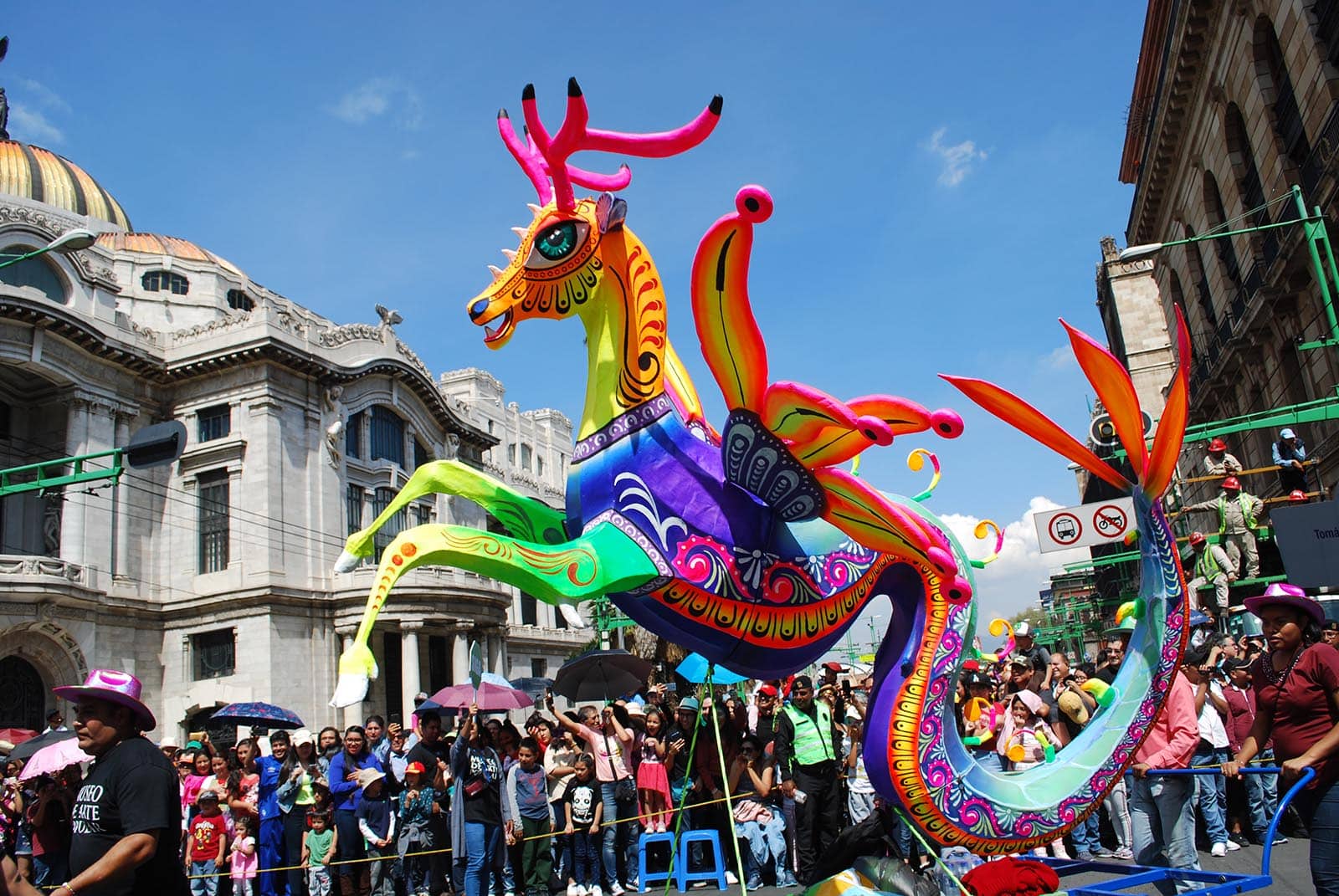
Today alebrijes are an undeniable part of the cultural and artistic imaginary of Mexico and it is a constantly evolving craft. Since 2007 the Museum of Popular Art of Mexico City has organized a parade of monumental alebrijes with the intention of promoting Mexican folk arts and culture.

In it hundreds of artisans build alebrijes up to four meters high and walk them through the historic center of the city in an event full of dance, music, and color.  All I can say is WOW!  


I sincerely hope you have enjoyed my introduction to the magical world of Alebrijes. And in closing I thought this image of a Oaxaca's Alebrije futbol (soccer) team player in his colorful alebrije shirt was a fitting closing image. Go team, go!


With my sincere thanks to Kevin Shaw for sharing his incredible collection and allowing me to photograph my favorite pieces for this blog posting.  Please see his web page at the following link: 
COLECTIKA ANCESTRAL CONTEMPORARY ART GALLERY
Galeria Colectika Art gallery in Puerto Vallarta at the following website: https://peyotepeople.com/ Address: #858 G. Sánchez, Calle Allende esquina, Centro, 48300 Puerto Vallarta, Jal.


Until we meed again, wishing you well wherever your travels and adventures take you. Saludos, Laura

Sunday, August 30, 2020

A BLOGGER'S TRAVEL MEMORIES PART TWO


As many of you know I have had a marvelous life exploring, living in, and sharing my life in Latin America with my husband.  It has been an amazing journey which I will always cherish. This is Part Two of this blog posting about those other travel memories with some of my favorite photographs from countries including Ecuador, Colombia, Greece, Australia, and New Zealand. So if you are ready, buckle up and here we go! 

ECUADOR


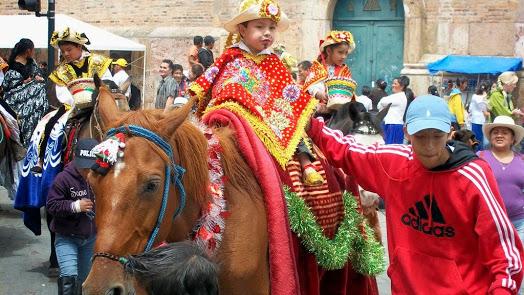
A lovely young lady participating in the Epiphany Parade in Cuenca, Ecuador. Isn't she and her dress simply gorgeous!


Another child participating in the annual Epiphany Parade (also referred to as Three Kings' Day) in Cuenca, Ecuador. What proud children, parents, and beautiful memories.


The Cathedral of the Immaculate Conception is commonly referred to as the New Cathedral of Cuenca in Ecuador. I personally thought the blue domes were especially beautiful.


Quito way, way back when and definitely before my days of blogging. The gold beaded necklaces worn by the local highland women are very traditional and the baby on the mother's back is definitely a special photo memory for me.


COLOMBIA 


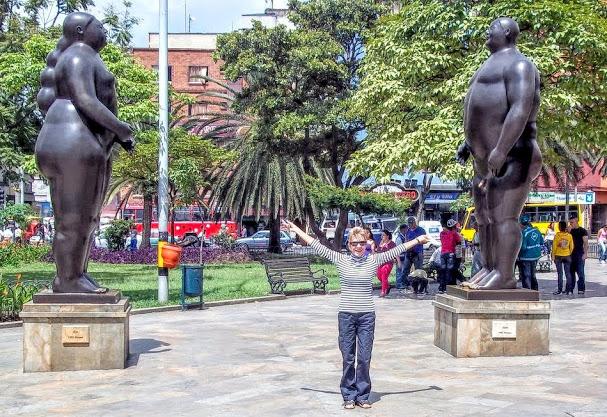
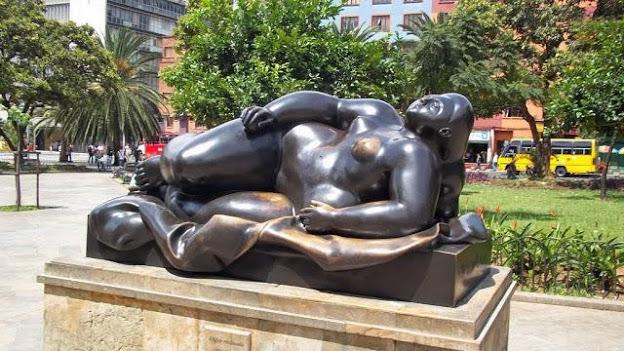
Enjoying downtown Medellin in Colombia with Botero's very voluptuous sculptures was not what I would call hard duty. On the contrary, I would call it a privilege to have met these magnificent and memorable sculptures.


Fernando Botero, a native of Medellin, Colombia is an internationally recognized figurative artist and sculptor. Botero's signature style known as "Boterismo" depicts people and figures in large, exaggerated sizes which can represent political criticism or humor, depending on the piece. My only comment was WOW!


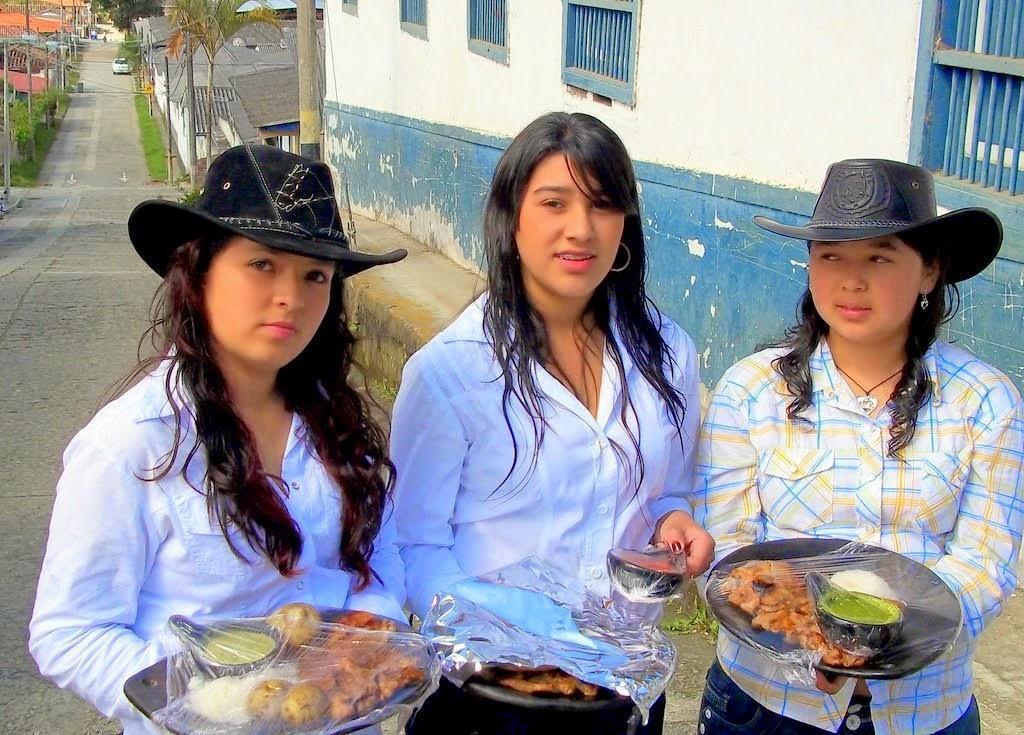
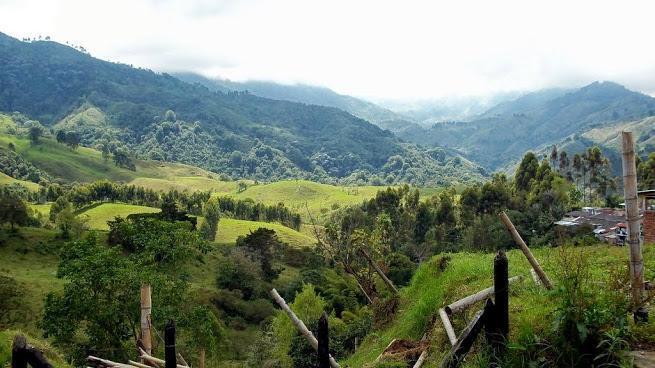
Salento is an Andean town in Colombia west of Bogota. It’s known for its coffee estates, verdant scenery, and lovely ladies who we found in "Western Dress" for an annual celebration. The town is a gateway to the snow-capped peaks of Los Nevados National Natural Park to the northeast.


My husband liked to joke that Colombia and it's verdant countryside was so green that it "hurt his eyes!" And neither of us has ever forgotten this memorable pronouncement.


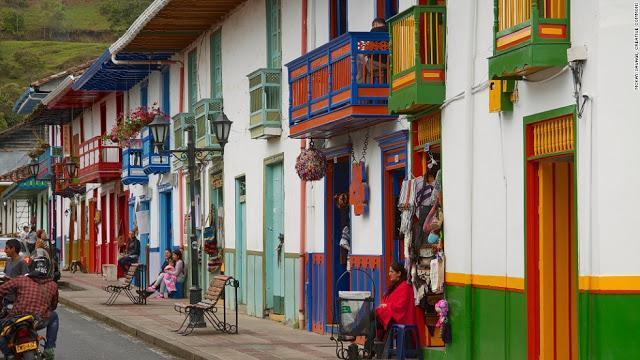
In Salento, Colombia Calle Real (the royal road or street) has colorful buildings and craft shops where the pace is slow and which was sincerely appreciated when we were weary from the road.

GREECE


Greece is a country on the Mediterranean coast in southern Europe. The country is known as the birthplace of democracy, the Olympic Games, western theater, and philosophy as well as the inspiration for Christianity and culture. The country is also famous for its mathematicians, historians, great warriors, and historical battles. And I fell in love with it.


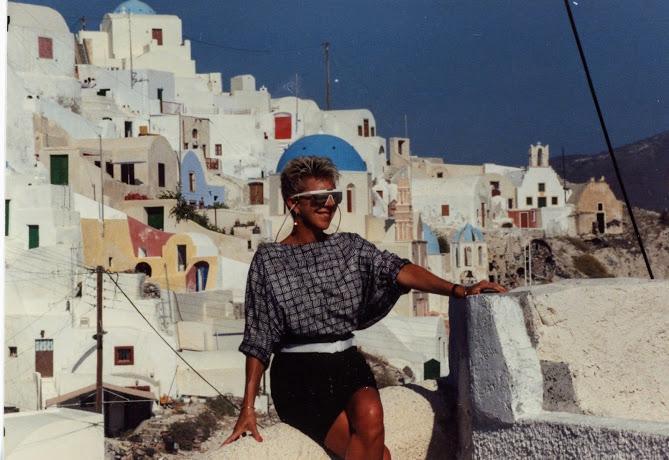
Santorini is an island in the southern Aegean Sea about 120 miles southeast of Greece's mainland. The whitewashed cubiform houses of its two principal towns, Fira and Oia, cling to cliffs above an underwater caldera on the Greek island of Santorini. They overlook the sea and small islands to the west with beaches made up of black, red, and white lava pebbles. Simply magical!


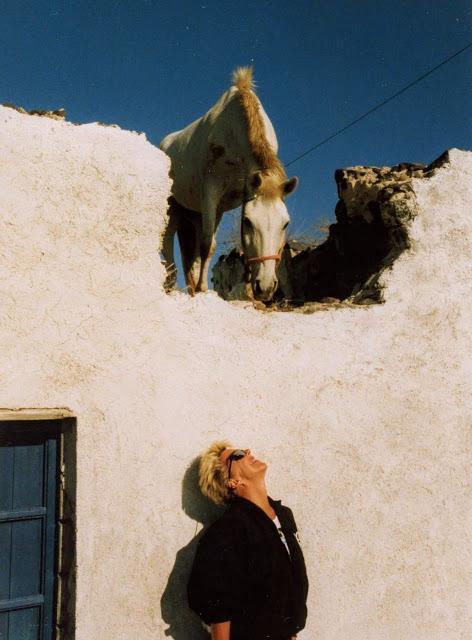
My favorite memories of Greece are from the Cyclades islands in the Aegean Sea. It was devastated by a volcanic eruption in the 16th century BC which forever shaped its rugged landscape. The above photograph is without a doubt a contender for one of my favorite photo memories of all time. It was taken on the island of Santorini off the coast of Greece.


The Parthenon is a former temple on the Athenian Acropolis in Greece and is dedicated to the goddess Athena whom the people of Athens considered their patron.  Construction began in 447 BC when the Athenian Empire was at the peak of its power and it was completed in 438 BC. When we visited the Parthenon it was obviously undergoing restoration, but that did not hinder our appreciation of this spectacular site.


AUSTRALIA  


Our gateway to visiting the amazing country of Australia, commonly referred to as the "LAND DOWN UNDER" was through the dazzling city of Brisbane as seen above and we were fortunate enough to re-visit Brisbane when changing our itinerary. It set the tone for our wonderful stay in Australia and I would love to revisit it one day.


How does one introduce a person to Australia? I believe it is like introducing a person to America or Canada which I find next to impossible because of their massive sizes, diverse cultures, amazing histories, incredible traditions, etc., etc.


So for the purpose of this blog posting I am limiting myself to some visual memories represented by my photographs taken many, many moons ago from the "Land Down Under" and I am looking forward to your company, mates (Aussie speak for friends).


Sunshine Beach on the Queensland's Coast of Australia we called home for a period of time. I think it appealed to us because of our Southern California backgrounds growing up on beaches and Sunshine Beach was definitely a beautiful place to chill and recharge our batteries.


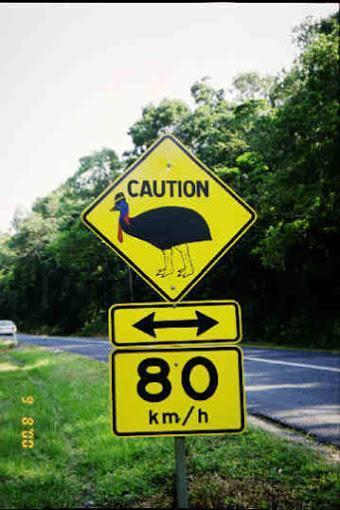
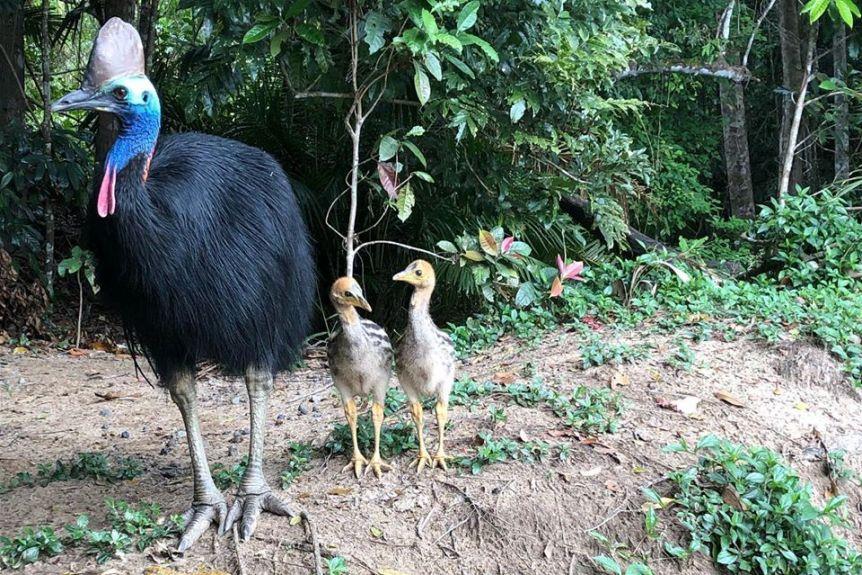
I loved the road signs in Australia including this sign warning it was a Cassowary crossing and to be on the lookout. The southern cassowary is the third tallest and second heaviest living bird and smaller only than the ostrich and emu.


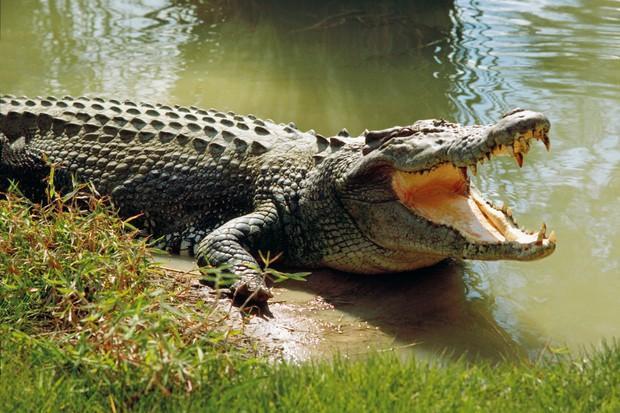
Another great Australian sign warning of possible crocodiles in the vicinity. What's not to love about this country. The following saltwater crocodile I found on the Internet, not that I was going to get close enough to photograph a live one!


NEW ZEALAND


Before the arrival of the Europeans in the 19th century Russell in the Bay of Islands of New Zealand was inhabited by the indigenous people, the Maori, because of its beautiful climate and the abundance of food, fish, and fertile soil. Russell was then known as Kororareka by the indigenous people. We found Russell enchanting and memorable and it is definitely on my wish list for a return visit.


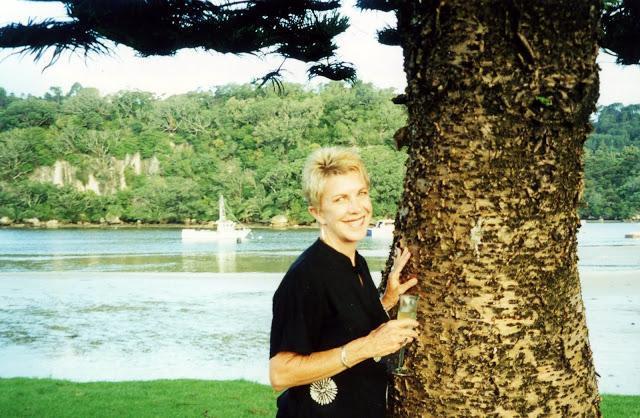
Russel on the Bay of Islands in New Zealand was wonderful and we enjoyed the warm company of the locals who opened their homes to us.


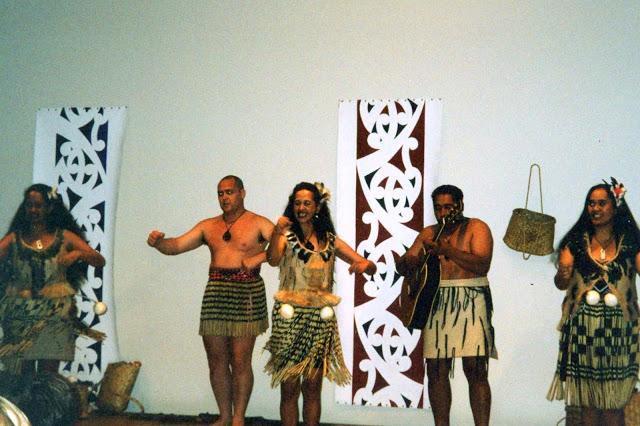
Rotorua, a town located on its namesake lake on New Zealand's North Island, is renowned for its geothermal activity and Maori culture. It is also home to a living Maori village and the New Zealand Maori Arts and Crafts Institute with traditional wood carving and weaving schools. A fabulous place to visit in my humble opinion.

Traditional Maori arts play a large role in New Zealand culture. They include whakairo (carving), raranga (weaving), kapa haka (group performance), whaikorero (oratory), and ta moko (tattoo).


Russell, formerly known by the Maori name Kororareka, was the first permanent European settlement and seaport in New Zealand. It is situated in the Bay of Islands in the far north of the North Island. Saying goodbye to New Zealand and Russell in the Bay of Islands was no easy thing.


Thank you for joining me on this excursion to some of my favorite places on this planet and I hope to see you again in the new future. Until then, stay safe and enjoy your travels. Laura