WELCOME TO BAJA CALIFORNIA
(Including Ensenada, Cataviña, Laguna San Ignacio, Mulegé, Bahia Concepción, Loreto, and Bahia de Magdalena)


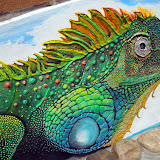
This iconic photograph represents all the beauty of Baja California that I loved.
The Trans Peninsular Highway (aka Mexican Federal Highway One) is the lifeline of the Baja California Peninsula. Baja is a jagged finger of mountains and desert torn from the Mexican mainland along the San Andreas Fault by millions of years of geologic violence. The highway of approximately 1,060 miles is mostly hard road with two-lanes which winds its way all the way to Cabo San Lucas and Land's End at the southern tip of one of the longest, wildest, and spectacular peninsulas to be found anywhere.

At times Mexico Federal Highway One seemed never-ending, but the landscape and beauty were undeniable.

Baja California is isolated on the west by the Pacific Ocean and on the east by the Sea of Cortez whose blue waters fill the deep chasm between Baja and the rest of Mexico. Officially named Golfo de California by the Mexican government it is commonly referred to as the Sea of Cortez after the Spanish conquistador who "discovered" it. The peninsula of Baja California is comprised of two states. The northern state is correctly referred to as Baja California (Lower California). The southern state is correctly referred to as Baja California Sur ( Lower California South). Carretera Peninsular Benito Juárez is the highway's official name and it was completed in 1973. The challenges of this highway along with the spectacular scenery makes the journey through Baja California a truly memorable experience.

I am excited to start this nostalgic trip through Baja California and will enjoy your company. So let's get started! Crossing the border at Tijuana immediately takes you into Baja California and you will immediately know you are in another country. Everywhere you look will tell you that you are in Mexico and that always excited me. As soon as you navigate through the city and the outlying areas of Tijuana you will find yourself on the Mexican Federal Highway No. 1 which will take us south on our journey. This is one of the most scenic coastal highways I have ever experienced.

Our first destination will be the city and port of ENSENADA. Along this scenic stretch of highway we will pass through the beach town of Rosarita Beach and then we will come to one of our favorite places in Baja to stop for lunch or for the night. The name of this place is La Fonda and it is has been a favorite of Baja goers for decades. Located on a bluff above a long beach which is perfect for walking or just relaxing it has some of the greatest Mexican "comfort" food and margaritas any where in Baja. It's funky and friendly and we have known friends to drive down from San Diego just to have lunch there. Better yet, however, to spend the night so you can also enjoy dinner and breakfast!
 Hot Mexican colors are a great greeting at La Fonda!

La Fonda's outdoor dining terrace with fabulous ocean view and great Mexican food are a must!


An alternative to funky La Fonda is Hotel Las Rosas which is just north of Ensenada. We spent many weekend getaways relaxing at the beachfront Hotel Las Rosas when it first opened and it was a perfect location for exploring Ensenada. As a matter of fact, we unknowingly were the very first guests to stay at Las Rosas and had the entire place to ourselves. What magic!

THE PORT AND CITY OF ENSENADA

Ensenada is the first sizable city south of the border in Baja. When we knew it was known for both commercial fishing and sports fishing and some fun night life. Those were the days when it was a fairly small town and before it became a port of call for cruise ships. It was also before the surrounding area became known for its vineyards and wineries much to my regret. Funny as this may sound, the most important memory of time spent in Ensenada was of fish tacos! This is where my husband introduced me to the delights of fish in a tortilla with salsa and I have never been the same! We would eat fish tacos for breakfast and lunch at the local fish market on the bay. This is where my love of fish tacos began and where our children were introduced to them. We all cannot thank you enough Ensenada!


Cataviña
After leaving Ensenada there are long stretches of highway passing by towns by the name of San Vicente, San Quintin, and El Rosario. Then the Trans Peninsular Highway cuts inland through spectacular desert landscape until you reach Cataviña, located 76 miles south of El Rosario which is one of those very memorable places in Baja.
Cataviña is easily remembered by almost all who drive the peninsula. If you didn’t know where you were you would probably think that you were on another planet. The thousands of magnificent, huge sized boulders, and gigantic rock formations in the area are not to be believed. Cataviña's amazing desert landscape with its unbelievable boulders look as though the gods had been playing marbles which they left behind where they had dropped. There is not a whole lot to do in Cataviña, but the desert landscape and the giant rocks are what makes Cataviña unique and memorable. It's also a good place to stop and spend the night before another day on the road.


After a good night's sleep and topping off the gas tank, we leave Cataviña for another day on the Trans Peninsular Highway. We will be passing through the town of San Ignacio (definitely worth a detour to visit) and the cutoff for the nearby Laguna San Ignacio (San Ignacio Lagoon). Every year gray whales migrate more than 10,000 miles between their summer feeding grounds in the Arctic and the coastal lagoons of the southern Baja peninsula. Laguna San Ignacio in Baja California Sur is one of three lagoons on the southwest coast of Baja that are the winter home of the gray whale. The whales use these protected, shallow, warm waters during the months of December to April mating, giving birth, and feeding their young calves.
Check out this video which was just published on YouTube:
VIDEO OF GRAY WHALES


San Ignacio Lagoon is within the El Vizcaino Biosphere Reserve, designated a Biosphere Reserve/World Heritage Site by the Mexican government in 1988 and also a UNESCO World Heritage Site. If time permits on your Baja driving journey and the whale season is on, a stop at San Ignacio Lagoon is highly recommended!
OK, it's time we get back on the road to continue our journey south. You might want to refer to the map at the top of the posting to get your bearings and confirm where you have been and where we are headed. Strap on your seat belts and let's visit MULEGE and BAHIA DE CONCEPCION on the SEA OF CORTEZ.
Mulegé

Misión Santa Rosalía de Mulegé backed by mountains: La Misión and Santa Clara. The meandering Mulegé River appears on the right lined with palm trees as seen on a sunny December afternoon. "Mulege Mission Pano" by Farwestern Photo by Gregg M. Erickson Licensed under CC BY 3.0 via Commons (Gracias for permission to share!)
Mulegé is situated at the mouth of the Río Santa Rosalía on the Sea of Cortez (see note at end of posting) in the state of Baja California Sur. Nestled between two hills in a lush tropical palm oasis the town of Mulegé is divided by a shaded river that runs towards an estuary that flows to the sea. Mulegé is rich in history with lots of great sites to see including the Misión Santa Rosalía de Mulegé, founded in 1705, the old state penitentiary finished in 1907; and the Sierra de Guadalupe cave paintings. Outdoor activities in the area are the main attraction and include mountain biking, snorkeling, scuba diving, kayaking, and deep sea fishing.

The cold northern current and the warm southern current come together to create an environment great for catching some of the 100 different species of fish in the Mulegé waters. Mulegé has a very casual vibe and is definitely on the funky side. We loved it and it was a perfect and convenient place to stay while ourselves visiting the incredible Bahía Concepción area.
Bahía Concepción

Bahía Concepción (Conception Bay) is one of the largest bays of Baja California. Lying on the the Sea of Cortez (also known as the Gulf of California) it is less than 20 miles south of Mulegé. Bahía Concepción as over 50 miles of beaches and is fantastic for beach lovers and those with a love of water activities. Some of the more popular beaches include (from north to south) Playa Los Naranjos, Playa Punta Arena, Playa Santispac, Playa Escondida, Playa Los Cocos, Playa El Coyote, Playa Buenaventure, Playa El Requeson, and Playa Armenta.
Although the beaches on the Bahía Concepción are very popular with campers, we spent many a day snorkeling and sunning on this beautiful bay with not another person in sight! A simply wonderful area and experience we will never forget.


Are you ready for another lovely beach and bay area? You better be as we are continuing down Mexico Highway One to the town of LORETO which is also located on the Sea of Cortez for more R&R.
LORETO

Photo credit to http://www.playasmexico.com.mx/ since I do not YET do aerial photography!
Loreto may not be as well known as some of the other larger Baja California beach resorts, but it has a charm and variety of activities which makes it a good place to visit. Loreto is also a good place to take a driving break. Loreto (aka Conchó) was the first Spanish settlement on the Baja California Peninsula and served as the capital of Las Californias from 1697 to 1777. The city of approximately 17,000 is located on the coast of the Gulf of California (aka Sea of Cortez) about 84 miles from Mulegé and about 220 miles north of the state capital of La Paz.

Loreto is a pretty town with a good choice of hotel, restaurants, and water-sports. Loreto also has a reputation as an excellent sport fishing location. It is home to the magnificent Parque Nacional Bahía de Loreto where the shoreline, ocean, and offshore islands are protected from pollution and uncontrolled fishing. Gray whales aren’t the only species to see while in Baja. Visitors to Loreto can watch fin back and blue whales, along with dolphins, sea lions, and exotic fish. In addition from kayaking among the offshore islands, additional activities include snorkeling and hiking up scenic canyons which offer breathtaking panoramas. There's something for everyone!

The "crown jewel" of Loreto is the Misión de Nuestra Señora de Loreto Conchó, or Mission Loreto, which was founded on October 25, 1697 by the Jesuit missionary Juan María de Salvatierra. This was the earliest successful mission in Baja California and it is often referred to as "the head and mother of all the Spanish missions in Upper and Lower California" (aka Baja California and Baja California Sur). Quite impressive! Most hotels and services are near this landmark mission church while the attractive seafront malecón is ideal for evening strolls.
The Loreto area is also considered by anthropologists to be the oldest human settlement on the Baja Peninsula. In "La Giganta" Mountain Range ("Sierra de la Giganta"") there are cave paintings in canyons and rock shelters. The nearest sites to Loreto are "Cuevas Pintas" (9 miles to the west) and "La Pinguica" (37 miles to the North). These cave paintings by the ancient indigenous groups of Baja California are world famous and some of them have been added to UNESCO'S list of world heritage sites. For anyone who enjoys cultural anthropology and archaeology as I do this might just be the excursion for you!

Loreto is also a member of the prestigious PUEBLO MAGICO organization and is one of only two cities in the Baja Peninsula to be be so honored. Congratulations, Loreto! See the following link.

LORETO - UN PUEBLO MAGICO
It's now time to say adios to Loreto and here we come Bahia de Magdalena! We are now crossing the peninsula of Baja California Sur once again back to the Pacific Coast. Our destination is BAHIA DE MAGDALENA, one of three gray whale birthing bays in Baja California. If our timing is right, we are in for another opportunity to visit the gray whales that have migrated to Baja for the birthing season.
BAHIA DE MAGDALENA


Magdalena Bay (Bahía Magdalena) is a 31 mile long bay along the western coast of the Mexican state of Baja California Sur. It is protected from the Pacific Ocean by the sandy barrier islands of Isla Magdalena and Isla Santa Margarita. Every year in November, approximately 10,000 (!) gray whales exchange the freezing waters of Alaska’s Bering Sea for the warmth of Mexico’s Baja California Peninsula. Once the whales reach the Mexican coast, they mate, bask in the warm lagoons, and give birth which makes January through early April the peak time to whale watch. During these months, boat excursions are available all along Baja California which give visitors the chance to observe these magnificent creatures in their natural environment.
The best places to have a "whale of an experience" are:
Laguna Ojo de Liebre (also known as Scammon’s Lagoon): this body of water is located about half way down the peninsula on the Pacific side in Guerrero Negro about 440 miles south of the border. It was the principal hunting lagoon used by commercial whale hunters in the 19th century. Today visitors arrive at the lagoon by car, but a national airport is also available for visitors flying in from other destinations in Mexico.
Laguna San Ignacio: is a peaceful natural lagoon that opens to the Pacific and lies approximately 40 miles west of the town of San Ignacio (which I recommend visiting). Access to this site is mostly by car although charter air service from international airports such as San Diego and Tijuana can be arranged along with group tours. See description and photos above.
Bahia Magdalena (Magdalena Bay): This bay has become increasingly popular for whale watching due to its proximity to the La Paz and Loreto International airports. See description and photos above.
My thanks with sincere appreciation to Google Images for use and sharing of the above whale photographs.

LA PAZ will be the first destination when we continue this adventure which I will publish as a sequel to this posting. BAJA CALIFORNIA: PART TWO will include CABO, LA PAZ, TODOS SANTOS, AND SAN JOSE DEL CABO.


No cheating! This is a journey by road and not by plane. See you soon.

I look forward to your company when we continue this journey and I certainly would appreciate your help with the driving. Until then, rest up and get ready for more adventure on Mexico Federal Highway One! See you soon, Laura

DISCLAIMER: Images taken from the Internet are assumed to be in the public domain. In the event that there is a problem or error with copyrighted material, the break of the copyright is unintentional and the material will be removed immediately upon request.